Best Places to Visit Near Belfast

Written by UK Hidden Gems Editorial
Updated 5 August 2026
The best places to visit near Belfast are Bog Meadows, Lisnabreeny Cregagh Glen, Collin Glen, Newtownabbey Bay Beach, High Tide Covers Rock Beach, Grey Point Fort, Glenoe Waterfall and Quoile Castle.
Belfast lies at the head of its lough, ringed by hills on one side and open water on the other, with the counties of Antrim and Down spreading out beyond the edge of the city. Green corners and wild shores are never far, from wetland reserves to wooded glens, beaches, old forts, waterfalls and castles.
On the western edge you can slip into the birdsong of Bog Meadows or climb through the trees of Colin Glen below Black Mountain, while the Castlereagh Hills to the south-east hold the glen and hilltop walk of Cregagh and Lisnabreeny. Along the lough shore, gentle beaches wait at Newtownabbey and Holywood, and the old guns of Grey Point Fort still guard the water near Helen's Bay.
Further out, a drive north into County Antrim reaches the tumbling Glenoe Waterfall, while a longer run south brings the tower-house ruin of Quoile Castle near Downpatrick. Glens, shores, history and wildlife all lie within easy reach.
Here are eight places to visit near Belfast.
Bog Meadows
Photo: Paul McIlroy via Geograph.org.uk
Bog Meadows On the western edge of Belfast, hemmed in by motorway and city yet alive with birds, Bog Meadows is a surprising pocket of wetland and wild grassland. This nature reserve gathers damp meadows, reedbeds, ponds and hedges, a remnant of the old floodplain of the River Blackstaff, laced with flat, easy paths and dotted with bird hides.
Reed buntings and sedge warblers sing from the reeds in summer, kingfishers flash along the water, and butterflies work the flowery grass. Looked after by a local wildlife trust, it makes an unexpected green escape close to the city centre.
Lisnabreeny Cregagh Glen
Photo: Albert Bridge via Geograph.org.uk
Lisnabreeny Cregagh Glen Over on the south-east edge of Belfast, in the Castlereagh Hills of County Down, Cregagh Glen and Lisnabreeny make up a National Trust walk. The route climbs from a wooded glen, with a stream and a waterfall running through it, up onto open farmland and a hilltop crowned by an ancient ringfort within a stand of mature trees.
Paths are unsurfaced, with wooden steps and some steep pulls, and bluebells come out in the glen in spring. From the top there are wide views over the city and the lough.
Near the summit lies the site of a wartime American military cemetery, in use between 1943 and 1948 and now marked by a memorial.
Collin Glen
Photo: Eric Jones via Geograph.org.uk
Colin Glen Also on the western edge of the city, Colin Glen is a wooded glen and forest park running along the Colin River below the slopes of Black Mountain. A path follows the river through the trees past small waterfalls, and the park has grown into an adventure spot, with an alpine coaster and ziplines threading through the woods.
Families come for both the gentle glen walk and the seasonal trails. It offers a welcome stretch of green ground right on the edge of Belfast, mixing quiet riverside woodland with a bit of outdoor thrill.
Newtownabbey Bay Beach
Photo: Albert Bridge via Geograph.org.uk
Newtownabbey Bay Beach North of the centre, Newtownabbey Bay Beach, also known as Hazelbank, is a sand and shingle shore on Belfast Lough, backed by Hazelbank Park. A walking and cycling path along the lough shore runs behind it, part of the wider Loughshore Trail, with parking and toilets in the park.
The main draw is the open view across the lough to Belfast and the far County Down shore. This is a gentle waterside spot for a walk or a cycle rather than a bathing beach, easy to reach from the north of the city.
High Tide Covers Rock Beach
Photo: Rossographer via Geograph.org.uk
High Tide Covers Rock Beach Across the lough in County Down, the shore at Holywood runs between the town and Cultra, a low foreshore of sand, shingle and mudflats. The tide covers it almost completely at high water and draws right back to uncover wide flats at low tide, bringing in wading birds and gulls.
The North Down Coastal Path runs along the back of it, with views across the lough to the hills of Antrim. The calm, muddy water makes it a place for walking and birdwatching rather than bathing, an easy outing from Belfast along the coast.
Grey Point Fort
Photo: Albert Bridge via Geograph.org.uk
Grey Point Fort Further along the County Down shore near Helen's Bay, Grey Point Fort is a coastal gun battery built in the early 1900s to guard the entrance to Belfast Lough. Two long six-inch guns still sit in their emplacements, brought here from forts in the south, with the old observation post and searchlight positions alongside.
It stands within Crawfordsburn Country Park and is cared for by a heritage group who open it to visitors. The guns look out over the lough toward the open sea, a reminder of how the approaches to Belfast were once defended.
Glenoe Waterfall
Photo: Rossographer via Geograph.org.uk
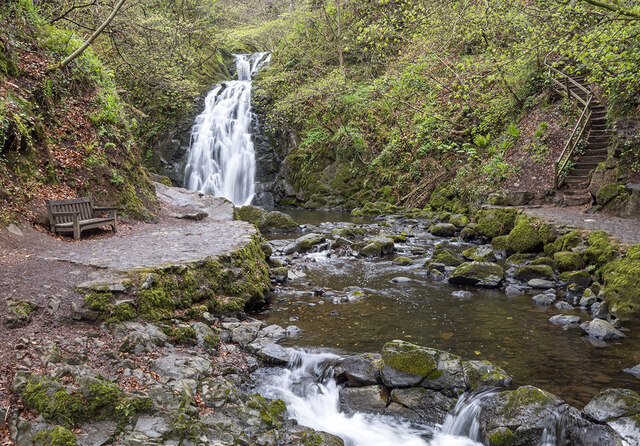
Glenoe Waterfall A drive north into County Antrim, a few miles south of Larne, leads to Glenoe Waterfall, which drops through a small wooded glen at the village of Gleno, in the care of the National Trust. A short circular walk on stepped paths climbs up and down the steep, often wet sides of the gorge, following the falling water.
It is a brief stroll from the village, best after rain when the flow is at its fullest. Two small car parks and picnic tables sit by the start, making it an easy stop on a day out north of Belfast.
Quoile Castle
Photo: Eric Jones via Geograph.org.uk
Quoile Castle The longest trip, a drive south toward Downpatrick in County Down, brings you to Quoile Castle, a ruined tower house on the east bank of the River Quoile. Built in the late sixteenth century and lived in until the eighteenth, it lost its south corner in a collapse, so a slice through the interior lies open to view, showing stone-vaulted ground-floor rooms, gun loops, fireplaces and passages tucked within the walls.
It is a small roadside ruin, cared for as a state monument and seen from the outside. A hoard of Elizabethan silver coins turned up on the site in the 1980s.
FAQs
How far are these places from Belfast?
Several sit right on the city's edge, from Bog Meadows at under three kilometres to Colin Glen and Cregagh Glen within about six. Glenoe Waterfall and Quoile Castle are longer drives out into Antrim and Down.
Where can you walk near Belfast?
Bog Meadows offers flat, easy paths through wetland on the western edge of Belfast, while Cregagh Glen and Colin Glen give wooded riverside walks with waterfalls a little further from the centre.
Are there beaches close to Belfast?
Yes. Newtownabbey Bay Beach and the shore at Holywood both line Belfast Lough, gentle sand, shingle and mudflat spots better suited to walking and birdwatching than to bathing.
Conclusion
From the reedbeds of Bog Meadows on the city's western edge to the tower-house ruin of Quoile Castle down near Downpatrick, the country around Belfast packs plenty of variety into a short reach. Close to home you can walk the wooded glens of Colin Glen and Cregagh, or stroll the lough shore at Newtownabbey and Holywood.
A little further afield, Grey Point Fort guards the water near Helen's Bay, and Glenoe Waterfall tumbles through its glen north toward Larne. Whether you fancy birdwatching, a glen walk, a bit of coastal history or the sound of falling water, there is something to suit an hour or a whole day out.
Wrap up for the weather, mind the tides on the lough, and these are the places to visit near Belfast.