Best Hidden Gems in Hertfordshire

Written by UK Hidden Gems Editorial
Updated 5 August 2026
The best hidden gems in Hertfordshire are London Gate, Hypocaust & Roman Mosaic, Scott's Grotto, Bushey Rose Garden, Roman Theatre of Verulamium, Roman Wall of St Albans, Welwyn Roman Baths and Cromer Windmill.
Hertfordshire may sit quietly in the shadow of London, but scratch beneath the surface and you find a county layered with Roman history, eccentric follies and beautifully restored gardens. Much of that story gathers around St Albans, built on the site of the Roman city of Verulamium, where you can trace the London Gate, look down onto a preserved Hypocaust and Roman mosaic, walk the surviving Roman Wall, and wander the grassy banks of the Roman Theatre.
Beyond the old city there are further treasures to uncover, from the flint-lined underground chambers of Scott's Grotto at Ware to the Edwardian elegance of Bushey Rose Garden. History keeps surfacing in unexpected places, such as the Welwyn Roman Baths sealed in a vault beneath a motorway, while Cromer Windmill turns as the county's last surviving post mill.
Some sites are free and open, others ticketed or seasonal, but all reward the traveller willing to look a little closer. Here are eight of the best hidden gems to seek out in Hertfordshire.
London Gate
Photo: Philip Halling via Geograph.org.uk
London Gate is the excavated remains of the main southeastern gateway of the Roman town of Verulamium, in Verulamium Park on the western edge of St Albans. Low stone foundations mark the gate, which stood on Watling Street, the road that ran to London and gave it its name.
Stretches of the Roman city wall from around AD 270 survive nearby, and the park itself is open and free, with a lake, the covered Hypocaust mosaic and the Verulamium Museum close at hand. It makes an easy and evocative starting point for exploring Roman St Albans on foot.
Hypocaust & Roman Mosaic
Photo: Nigel Cox via Geograph.org.uk
Hypocaust & Roman Mosaic preserves a Roman mosaic floor and the underfloor heating beneath it, kept in a small glass-fronted building in Verulamium Park at St Albans, where they were dug up. The mosaic and its hypocaust come from a large town house of around AD 200, from the Roman city of Verulamium that once stood here.
You can look down onto the patterned floor and the brick pillars that once carried it, with warm air once passing between them. It stands free to enter, near the Verulamium Museum in the park, and is well worth seeking out.
Scott's Grotto
Photo: Mike Quinn via Geograph.org.uk
Scott's Grotto is an eighteenth-century grotto dug into a chalk hillside at Ware, a set of underground passages and chambers lined with flints, shells, fossils and coloured glass, often called the finest of its kind in England. It was made between 1764 and 1768 by the Quaker poet John Scott as a retreat and a place to entertain, and its six chambers run back into the hill, the deepest some way below the summit, lit by shafts to the surface.
It is looked after by a local society and opens on set days, so check ahead before visiting this quiet, otherworldly place.
Bushey Rose Garden
Photo: Alex McGregor via Geograph.org.uk
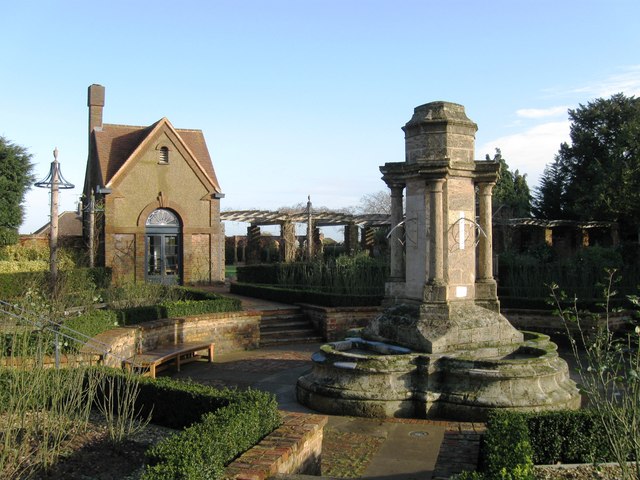
Bushey Rose Garden is a small, restored formal garden in the town of Bushey, laid out with beds of roses around a carved stone fountain. It was designed in the early nineteen-hundreds by Thomas Mawson for the artist Hubert von Herkomer, who lived next door and is said to have paid Mawson with a portrait instead of a fee.
The garden fell into decline but was carefully restored and reopened around 2010, its terraces, paths and rose beds brought back to their original design. Now a free public garden of clipped hedges, roses and stonework, it is a fine small example of Edwardian design, at its best in summer.
Roman Theatre of Verulamium
Photo: PAUL FARMER via Geograph.org.uk
Roman Theatre of Verulamium is the excavated remains of a Roman theatre on the western edge of St Albans, one of very few true theatres known in Roman Britain. Visitors walk among the grassy banks and low foundation walls, with a single replica column marking the stage and the footings of a townhouse and shrine nearby.
It was built around AD 140 and later enlarged to hold several thousand people before falling into disuse and being used as a rubbish tip. It stands on the private Gorhambury estate and charges a small entry, so bring a little for this rare survival.
Roman Wall of St Albans
Photo: Nigel Cox via Geograph.org.uk
Roman Wall of St Albans is a long surviving stretch of the city wall of Roman Verulamium, running through Verulamium Park on the edge of the modern city. Built of flint and tile around the AD 260s, it once ran for about two miles around the town, standing some five metres high, and the sections that survive still rise to about four metres, along with the footings of towers and a town gate.
It is a free English Heritage site, open in the park, close to the Roman museum, the lake and the theatre nearby. An easy and atmospheric walk into the deep past.
Welwyn Roman Baths
Photo: Mr Ignavy via Geograph.org.uk
Welwyn Roman Baths are the preserved bath house of a Roman villa, sealed inside a steel vault beneath junction 6 of the A1(M) near Welwyn. A pedestrian tunnel leads down to the chamber, where you can see the underfloor heating system and the floors of the warm, hot and cold rooms with the cold plunge bath.
The remains were found in 1960 by a local archaeologist and saved when the motorway was built over them. Welwyn Hatfield Museum Service runs the site, so it is worth checking opening details before making the trip to this striking hidden survival.
Cromer Windmill
Photo: John M via Geograph.org.uk
Cromer Windmill is a wooden post mill standing on a mound near Ardeley, the last surviving mill of its kind in Hertfordshire. The whole body of the mill turns on its central post to face the wind, sitting above a low roundhouse, with four sails on the front.
Volunteers restored it over many years and open it to visitors through the summer, so plan around the season. It stands in open country a few miles east of Stevenage, a striking reminder of the county's working past.
FAQs
Which Hertfordshire hidden gems are free to visit?
Several sites in Verulamium Park are free and open, including the London Gate, the Roman Wall and the Hypocaust with its Roman mosaic. Bushey Rose Garden is also a free public garden. Facilities and access can vary, so it is worth confirming details before you go.
Do any of these sites charge for entry?
Yes. The Roman Theatre of Verulamium stands on the private Gorhambury estate and charges a small entry fee. Scott's Grotto and the Welwyn Roman Baths open on limited days, so check their arrangements in advance.
When should you visit Cromer Windmill?
Cromer Windmill is opened by volunteers through the summer, so warmer months are the time to see inside. It stands in open country a few miles east of Stevenage. Check opening days before setting out.
Conclusion
From the layered Roman remains of St Albans to the quiet corners of Ware, Bushey and Ardeley, Hertfordshire rewards anyone prepared to look beyond the obvious. You can trace the London Gate and the Roman Wall for free in Verulamium Park, pay a small charge to explore the Roman Theatre, or descend into the flint-lined chambers of Scott's Grotto on one of its open days.
The Welwyn Roman Baths and Cromer Windmill show how history can hide in the most unexpected settings. Many of these places open seasonally or on set days, so it is always worth checking ahead before you travel, and sturdy shoes help on grassy ruins and country paths.
Whether you love Roman archaeology, gardens or windmills, these are the best hidden gems to seek out in Hertfordshire.