Best Places to Visit Near Lancaster

Written by UK Hidden Gems Editorial
Updated 5 August 2026
The best places to visit near Lancaster are White Spout, Lower Leck Beck, Thornton Force Waterfall, White Scar Cave, Gaping Gill, Church of St Walburge, Avenham and Miller Parks and Ibbeth Peril.
Lancaster sits on the River Lune between the fells of the Forest of Bowland and the wide sweep of Morecambe Bay, well placed for a run of waterfalls, caves and green riverside walks. The country to the east and north-east is the real draw, where the limestone of the Yorkshire Dales throws up some of the finest scenery in the region.
Close to home, the little moorland fall of White Spout hides in upper Littledale. Further out towards Ingleton lie a cluster of watery wonders: Lower Leck Beck in its cave country, the wide sheet of Thornton Force, the show cave at White Scar and the vast pothole of Gaping Gill on Ingleborough.
Away up Dentdale, Ibbeth Peril offers a bold plunge pool for swimmers. To the south, the city of Preston adds the soaring spire of St Walburge's and the Victorian greenery of Avenham and Miller Parks.
Here are eight places to visit near Lancaster.
White Spout
Photo: Tom Richardson via Geograph.org.uk
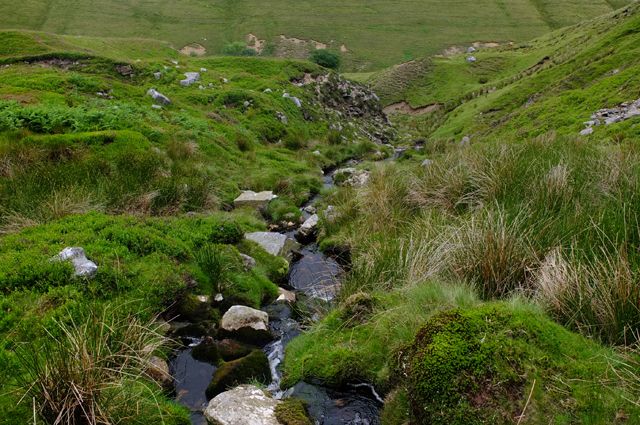
White Spout Just a few miles east of Lancaster, White Spout is a small moorland waterfall hidden away in upper Littledale, on the edge of the Forest of Bowland. It drops on a minor stream called Whitespout Gutter, in high grazing land that drains down through Udale Beck and Artle Beck.
There are no signposts or facilities here, and the fall is reached on foot across rough open ground on the Littledale circuit. The best view comes from beside the beck, where the path crosses near the old shooting butts.
It is a genuinely unspoilt spot, close to the city yet feeling wonderfully remote.
Lower Leck Beck
Photo: N Chadwick via Geograph.org.uk
Lower Leck Beck East of Lancaster, on the border of Lancashire and Cumbria at the edge of the Yorkshire Dales, Lower Leck Beck runs through classic limestone country below Leck Fell. This is karst landscape, and the beck is tied to one of the great cave systems of Britain: water sinks underground through the rocks of Ease Gill and resurfaces lower down at Leck Beck Head, part of the longest cave system in the country.
Above ground, the steep-sided gorge at Ease Gill Kirk, with its leaning rock walls and cave mouths, is the highlight of a long circular walk from Leck village. The upland shafts themselves are fenced off for safety.
Thornton Force Waterfall
Photo: Kevin Rushton via Geograph.org.uk
Thornton Force Waterfall A little further into the Dales, and worth the drive east to Ingleton, Thornton Force is the high point of the popular Ingleton Waterfalls Trail. Here the River Twiss pours over a lip of limestone into a pool below, and you can walk right under the overhanging rock.
Its real fascination lies in the cliff behind: level beds of limestone sit straight on top of much older tilted slates, with a gap of hundreds of millions of years between them, a textbook example of what geologists call an unconformity. It is reached on the paid circular trail from Ingleton, which strings together a whole series of falls along the way.
White Scar Cave
Photo: Steve Houldsworth via Geograph.org.uk
White Scar Cave Nearby in the valley of Chapel-le-Dale, on the road between Ingleton and Ribblehead, White Scar Cave sits at the foot of Ingleborough and makes a fine day out underground. Guided tours run for about a mile and take around 80 minutes, following underground streams and waterfalls past flowstone and stalactites, before opening into a large chamber known as the Battlefield.
There is a cafe and shop at the entrance for afterwards. The cave was first explored in 1923 and has welcomed visitors since 1925, so it comes with a good century of history.
It is an easy choice for a wet-weather day in the Dales.
Gaping Gill
Photo: Peter Bond via Geograph.org.uk
Gaping Gill Higher up the same fell, and another good drive east, Gaping Gill is a huge pothole on the slopes of Ingleborough, where the water of Fell Beck pours over the edge and drops around a hundred metres underground. Below lies one of the largest natural chambers in Britain, a cavern big enough to hold a cathedral.
For most of the year the shaft belongs to cavers alone, but twice a year caving clubs rig a winch and lower members of the public down to the chamber floor and back up again. The moor around the opening is bare, open fell, so wrap up well and wear sturdy boots.
Church of St Walburge
Photo: David Robinson via Geograph.org.uk
Church of St Walburge carries a limestone spire that climbs to around 94 metres, taller than any other church spire in England save the cathedrals at Salisbury and Norwich. This large Roman Catholic church went up in Preston in the 1850s, a Gothic design by Joseph Hansom, the architect who also lent his name to the hansom cab.
Inside, a wide nave opens beneath a high hammerbeam roof, lit by a large rose window. Since 2014 it has served as a shrine with a daily traditional Latin Mass, and now and again the spire is opened for booked climbs to the top.
Avenham and Miller Parks
Photo: David Dixon via Geograph.org.uk
Avenham and Miller Parks Also in Preston, and an easy pairing with St Walburge's, Avenham and Miller Parks are two adjoining Victorian parks on the banks of the River Ribble, laid out together by Edward Milner and opened in 1867. Avenham is the larger and more natural of the two, sloping down to the river, while Miller Park beside it is smaller and formal, with a fountain, a grotto and a statue of the Earl of Derby.
Riverside walks, a Japanese garden and the old tram-road bridge across the Ribble all draw visitors, with a pavilion cafe near the middle. The layout has changed little since the 1880s.
Ibbeth Peril
Photo: N Chadwick via Geograph.org.uk
Ibbeth Peril Last of the set, up in beautiful Dentdale to the north-east, Ibbeth Peril is a spot on the River Dee where the water drops over a limestone ledge into a deep, dark plunge pool. It is a well-loved wild swimming spot, though the river can rise fast and turn dangerous after rain, so it needs treating with respect.
Beside the fall is the mouth of Ibbeth Peril Cave, a genuine cave system explored by cavers. Woodland and rock enclose the pool, just a short way off the road up the dale, making it a lovely place to cool off on a warm summer afternoon.
FAQs
Where can you go wild swimming near Lancaster?
Ibbeth Peril on the River Dee in Dentdale is a popular wild swimming spot within reach of Lancaster, with a deep plunge pool below a limestone ledge. The water can rise quickly after rain, so take care and check conditions first.
Which caves can you visit near Lancaster?
White Scar Cave near Ingleton offers guided tours of around 80 minutes past underground streams and waterfalls. For something more adventurous, Gaping Gill on Ingleborough opens to the public on winch descents twice a year.
Are the waterfalls near Lancaster easy to reach?
It varies. Thornton Force sits on the well-made Ingleton Waterfalls Trail and is easy to reach, while White Spout in Littledale needs a walk across rough open moorland with no signposts.
Conclusion
With Bowland on one side and the limestone Dales on the other, Lancaster is a fine base for a run of waterfalls, caves and riverside walks. Close by, White Spout tumbles quietly in Littledale, while a short drive east opens up Lower Leck Beck, the wide sheet of Thornton Force and the underground wonders of White Scar Cave and Gaping Gill on Ingleborough.
Up Dentdale, the plunge pool at Ibbeth Peril tempts wild swimmers on a warm day. South in Preston, the soaring spire of St Walburge's and the Victorian lawns of Avenham and Miller Parks round things off with a change of scene.
Waterfalls, caves, swimming and green city parks: whatever mood you are in, these are the places to visit near Lancaster.