Top Hidden Gems Day Trips from Portsmouth

Written by UK Hidden Gems Editorial
Updated 5 August 2026
The top Hidden Gems Day Trips from Portsmouth include Southsea Rose Garden, Southsea Castle, Eastney Beam Engine House, Spitbank Fort, Farlington Marshes, Racton Ruin, Bursledon Brickworks Museum and Old Winchester Hill.
Portsmouth packs plenty into its own shoreline, but a day trip out from the city turns up even more. Begin along the Southsea seafront, where the Rose Garden, the Tudor Southsea Castle and the Eastney Beam Engine House all sit within an easy stroll of the sea, with Spitbank Fort standing out on its shoal in the Solent.
Head north to the edge of the city for the bird-rich sweep of Farlington Marshes on Langstone Harbour. From there the net widens: drive east into West Sussex for the brooding Racton Monument near Chichester, or northwest to the steaming machinery of Bursledon Brickworks at Swanwick.
Finish inland at Old Winchester Hill, an Iron Age hillfort crowning the chalk of the Meon valley. Some of these are on your doorstep and some ask for a short drive, but all reward the effort with a change of pace.
It makes for a varied day of coast, history and quiet countryside. Here are eight hidden gems for a day trip from Portsmouth.
Southsea Rose Garden
Photo: Barry Shimmon via Geograph.org.uk
Stroll through the Southsea Rose Garden, laid out within the earthworks of the old Lumps Fort on the seafront at Southsea, close to Canoe Lake. It was created in 1952, with beds of hybrid tea and climbing roses threaded among pergolas, and a Japanese garden was added alongside in 2000 to mark Portsmouth's twinning with Maizuru in Japan.
The surviving fort ramparts lift you up for raised views over the Solent. Information boards nearby recall the Cockleshell Heroes raid of 1942, whose crews trained along this very shore, giving a peaceful garden an unexpectedly stirring backstory to mull over as you wander.
Southsea Castle
Photo: Martyn Pattison via Geograph.org.uk
Explore Southsea Castle, an artillery fort on the seafront built in 1544 for Henry VIII as part of his chain of coastal defences, with a square keep, gun platforms and angled bastions wrapped by a dry moat. A whitewashed lighthouse was added in 1828.
You can walk the ramparts, keep and moat, study old cannon and displays, and take in wide views over the Solent, roughly from the spot where Henry is said to have watched his warship the Mary Rose go down in 1545. Portsmouth City Council has run it as a museum since 1967, and entry is free, making it an easy stop on any seafront day.
Eastney Beam Engine House
Photo: Chris Allen via Geograph.org.uk
Step inside the Eastney Beam Engine House, a Victorian pumping station at Eastney built in 1887 as part of Portsmouth's main sewage works. Within it stand two great rotative beam engines made by James Watt and Company, which once pumped the city's sewage and are now kept as a preserved industrial museum.
A separate gas engine house on the site holds early-20th-century engines too. Volunteers run it for the city council, and while entry is free it opens only a handful of days each year, roughly the last Sunday of the month, so it pays to check the dates before you set off.
Spitbank Fort
Photo: Chris Downer via Geograph.org.uk
Spitbank Fort Fear of a French attack on the naval base at Portsmouth threw up a ring of sea forts in the 1860s and 1870s, and this circular one on a shoal in the Solent formed part of the inner line, sitting behind the larger forts further out. Around fifty metres across, it is built of granite and clad in iron armour where it faces the open water.
A later life as a small hotel and events venue began in 2012, but it closed and the fort was sold at auction in 2024, leaving it shut to the public. Only a boat will get you to it, so it stays a sight best admired from the water.
Farlington Marshes
Photo: Chris Gunns via Geograph.org.uk
Take a walk around Farlington Marshes, a coastal grazing marsh on a low neck of land reclaimed from Langstone Harbour on the northern edge of Portsmouth, cared for by the Hampshire and Isle of Wight Wildlife Trust. A sea-wall path of about two and a half miles loops past freshwater and brackish marsh and a lagoon, and it ranks among the region's finest spots for birds, with big winter flocks of Brent geese, waders, short-eared owls and passing migrants.
It is a protected site of international importance, and old wartime decoy control bunkers still survive out on the marsh, adding a layer of history to the wildlife.
Racton Ruin
Photo: Colin Smith via Geograph.org.uk
Drive out to Racton Monument, a ruined eighteenth-century folly tower standing among farmland in the South Downs near Chichester, over in West Sussex. Triangular at its base with a round turret at each corner, it rises as a roofless, floorless brick shell, most of the flint that once faced it long gone, and it can be picked out for miles.
It was built between about 1766 and 1775 for the Earl of Halifax, once four storeys and some eighty feet tall, though whether it served as a summerhouse or a lookout over the harbour was never clearly recorded. It stands on private land and carries a lasting local name as an eerie, haunted place.
Bursledon Brickworks Museum
Photo: Peter Facey via Geograph.org.uk
Bursledon Brickworks Museum Said to be the last steam-driven brickworks of its kind in Britain, this preserved Victorian factory at Swanwick in Hampshire still holds its original steam engine, clay machinery and continuous kiln. Built in 1897 and worked until 1974, its surviving buildings, kiln, chimney and drying sheds are all listed.
Volunteers run it now, opening it seasonally for working steam days, with narrow-gauge railways, a heritage bus collection and a cafe to fill out a visit. It stands on Swanwick Lane, the Bursledon in its older name being simply the nearest old parish, though these days it often goes by just the Brickworks Museum.
Old Winchester Hill
Photo: T Eyre via Geograph.org.uk
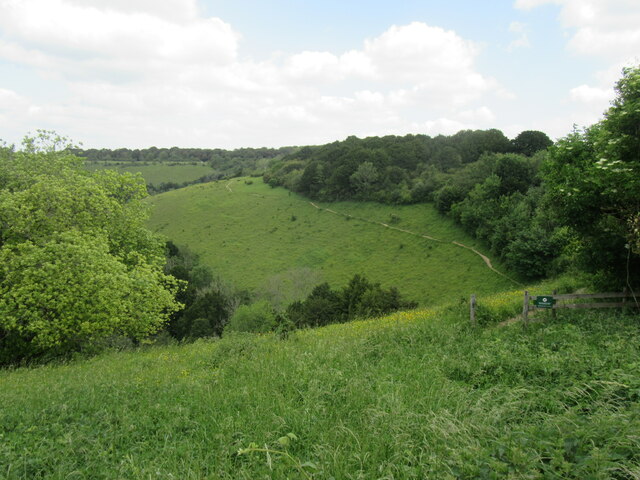
Climb Old Winchester Hill, which rises on the eastern side of the Meon valley in Hampshire, about eleven miles from the city of Winchester despite the name, reaching around 197 metres. Its summit carries an Iron Age hillfort, its grassy banks and ditches still sharply cut, with Bronze Age burial mounds set inside and around the enclosure.
It is a national nature reserve of chalk grassland, rich in orchids and in butterflies such as the chalkhill and Adonis blue, with wide views spilling over the valley below. The South Downs Way runs across it, making it a fine goal for a walking day out from Portsmouth.
FAQs
Which gems are closest to Portsmouth?
The Southsea Rose Garden, Southsea Castle, the Eastney Beam Engine House and Farlington Marshes all lie within a few miles of Portsmouth, easily reached on the seafront or the city's northern edge.
Are any of these places only open on certain days?
Yes. The Eastney Beam Engine House opens just a few days a year near Portsmouth, roughly the last Sunday of the month, while Bursledon Brickworks at Swanwick runs seasonal steam days. Check ahead before you go.
Can you reach Spitbank Fort from Portsmouth?
Spitbank Fort stands on a shoal in the Solent off Portsmouth and can only be reached by boat. It was sold at auction in 2024 and is not currently open to the public, so it is best viewed from the shore.
Conclusion
There is far more to a day out from Portsmouth than the harbour, as these eight spots make clear. Close to the city you can wander the Southsea Rose Garden, tour Tudor Southsea Castle and the Eastney Beam Engine House, look out to Spitbank Fort and walk the birdwatchers' path around Farlington Marshes.
Venture a little further and you reach the eerie Racton Monument near Chichester, the working steam of Bursledon Brickworks at Swanwick and the ancient ramparts of Old Winchester Hill in the Meon valley. Some open only on set days, so a quick check before you travel is wise.
From seafront forts to chalk hillforts, and from roses to rusting sea defences, these are the hidden gems for a day trip from Portsmouth.