Best Places to Visit Near Shrewsbury

Written by UK Hidden Gems Editorial
Updated 5 August 2026
The best places to visit near Shrewsbury are Moreton Corbet Castle, Lyde Waterfall, Hawkstone Park Follies, Oakleymill Waterfall, Hoffmann Kiln, Llanymynech Rocks, Montgomery Castle and Astbury Falls Waterfall.
Shrewsbury sits in a great loop of the River Severn, a medieval county town at the heart of Shropshire and within easy reach of wonderfully varied countryside. Head north-east and you will find Moreton Corbet Castle, a romantic ruin, together with the steep sandstone follies of Hawkstone Park.
To the south rise the Shropshire Hills, where the hidden Oakleymill Waterfall tumbles down a fold of the Long Mynd, while south-east lies the wooded Ironbridge Gorge and the scramble to Lyde Waterfall, with Astbury Falls further on near Bridgnorth. West towards the Welsh border, the old limeworks give you the vast Hoffmann Kiln and the flowery cliffs of Llanymynech Rocks, and a longer run south-west reaches the ridge-top ruin of Montgomery Castle in Powys.
Castles, cascades, nature reserves and rugged walks all lie within a short drive of the town. Whether you fancy a gentle stroll, a rocky scramble or a picnic with a view, there is plenty here to tempt you outdoors.
Here are eight places to visit near Shrewsbury.
Moreton Corbet Castle
Photo: Betty Longbottom via Geograph.org.uk
Visit Moreton Corbet Castle Just north-east of Shrewsbury, this ruin stands in open countryside beside the parish church, joining a medieval castle to the shell of a grand Elizabethan mansion. The oldest parts are a thirteenth-century keep and gatehouse, and beside them rises a roofless three-storey range whose rows of tall mullioned windows and classical detailing sit open to the sky.
It began as a timber castle held by the Toret family and passed by marriage to the Corbets, who raised the great house late in the sixteenth century. Building work halted when Robert Corbet died of plague in 1583.
Entry is free through daylight hours.
Lyde Waterfall
Photo: John Hall via Geograph.org.uk
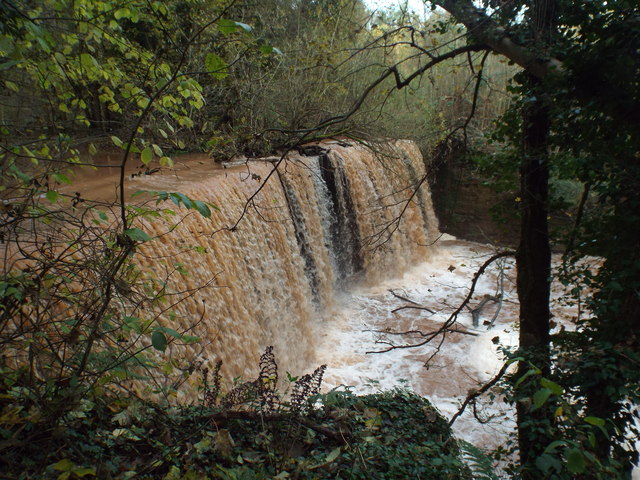
Seek out Lyde Waterfall South-east of town, in the wooded Ironbridge Gorge, this is a run of little cascades on the Lyde Brook, tucked into the steep ground of Loamhole Dingle just north of Coalbrookdale. The brook slips through a narrow, tree-filled valley carved by meltwater in the distant past, part of the wider landscape of the old ironmaking district.
There is no made path down: reaching the water means a rough, muddy scramble of roughly a kilometre through the trees, usually begun from Coalbrookdale. The flow runs thin in dry spells and grows much fuller after a spell of rain.
Hawkstone Park Follies
Photo: Chris Allen via Geograph.org.uk
Explore Hawkstone Park Follies Also to the north, near Weston-under-Redcastle, Hawkstone Park is an eighteenth-century landscape of follies laid out among steep sandstone cliffs and woodland. The paths climb past a grotto, a tall white tower, a monument and other curious built follies, ducking through dark tunnels cut into the rock and crossing bridges between the crags.
The going is steep and rugged, with plenty of steps and stiff climbs, and a torch comes in handy for the tunnels. It is run as a visitor attraction, opening on set days across the year, so it is worth checking times before you set off.
Oakleymill Waterfall
Photo: Alan Bowring via Geograph.org.uk
Find Oakleymill Waterfall To the south, in the Shropshire Hills near Church Stretton, this modest fall hides in one of the steep wooded hollows on the eastern flank of the Long Mynd. The hill is cut by a run of these narrow valleys, known locally as batches, and the waterfall can be reached only on foot along the hill paths, with no signpost or road to guide you.
It suits walkers out exploring the moorland tops and their streams rather than anyone after a ready-made attraction. The nearest parking and facilities are down at Carding Mill Valley or Little Stretton.
Hoffmann Kiln
Photo: David Smith via Geograph.org.uk
Step inside the Hoffmann Kiln Out west on the Shropshire and Wales border at Llanymynech, this is one of only three kilns of its kind still standing in the country, the heart of an old limeworks now kept as the Llanymynech Heritage Area. Built in 1899 and worked until 1914, it burned lime without pause in a ring of chambers fired one after another, an idea taken from brick-making, its smoke drawn up a tall chimney of about forty-two metres that still towers over the site.
You can step right inside the cavernous, brick-lined chamber where men once toiled in noise, dust and heat. It is free, set in a nature reserve with parking nearby.
Llanymynech Rocks
Photo: Colin Park via Geograph.org.uk
Wander Llanymynech Rocks Just beside the kiln, this limestone nature reserve straddles the Powys and Shropshire border near the village of Llanymynech. It sits on former quarries whose tall cliffs rise above the flat fields around them, with old stone tramways and a winding house left from centuries of digging that ran until the First World War.
The thin grassland and spoil heaps are thick with wildflowers, orchids, thyme and marjoram among them, and butterflies such as the pearl-bordered fritillary and green hairstreak. A surfaced path leads from a small car park to a viewpoint, with rougher tracks and kissing gates beyond, and Hebridean sheep graze the slopes in season.
Montgomery Castle
Photo: Colin Park via Geograph.org.uk
Discover Montgomery Castle A longer day-trip south-west into Powys, about thirty kilometres from Shrewsbury, brings you to this thirteenth-century royal castle on a narrow rocky ridge above the little town of Montgomery, with wide views over the Severn valley and the border country. You walk up from the town to a free site, where the footings and standing fragments of the gatehouse, D-shaped towers, curtain walls and deep rock-cut ditches survive, now linked by timber footbridges.
It was begun in 1223 on the orders of the young King Henry III, on a stronger spot than an earlier earthwork castle close by. Parliament tore it down in 1649 after the Civil War, and Cadw now cares for it.
Astbury Falls Waterfall
Photo: Chris Hodrien via Geograph.org.uk
Visit Astbury Falls Waterfall The final trip runs south-east towards Bridgnorth, a little over thirty kilometres away, to a quiet corner of Shropshire countryside. Astbury Falls is a small, privately run park built around a fishing lake and named after the little waterfall on the site.
The grounds are gentle and part-wooded, with the lake at their heart and lodges and camping pitches set around it. This is a low-key rural retreat rather than an open public landmark, given over to angling, peaceful stays and the sound of running water, with rolling farmland and the Severn valley close at hand.
FAQs
Which places near Shrewsbury are free to visit?
Several are free, including Moreton Corbet Castle and the Hoffmann Kiln at Llanymynech, both open sites, along with Montgomery Castle in Powys, which is cared for by Cadw. The Llanymynech Rocks nature reserve is also free to wander.
Are there good waterfalls near Shrewsbury?
Yes. Lyde Waterfall in the Ironbridge Gorge and Oakleymill Waterfall on the Long Mynd are both hidden falls reached on foot, while Astbury Falls near Bridgnorth is a gentler lakeside spot.
What can families do around Shrewsbury?
Hawkstone Park Follies, with its tunnels, tower and grotto, makes an adventurous day out, while Llanymynech Rocks offers easy paths, wildflowers and grazing Hebridean sheep close to the Welsh border.
Conclusion
From ridge-top ruins to hidden cascades, the countryside around Shrewsbury rewards a bit of exploring in every direction. North-east you have the romance of Moreton Corbet Castle and the rocky theatrics of Hawkstone Park, while the Shropshire Hills to the south hold the quiet Oakleymill Waterfall and the wooded scramble to Lyde Waterfall in the Ironbridge Gorge.
West along the Welsh border, the Hoffmann Kiln and Llanymynech Rocks pair industry with wildflowers, and a longer run rewards you with Montgomery Castle in Powys and the peaceful grounds of Astbury Falls near Bridgnorth. Whether you prefer history, birdsong, a stiff climb or simply the sound of falling water, these are the places to visit near Shrewsbury.