Solo Hidden Gems in Snowdonia & Gwynedd

Written by UK Hidden Gems Editorial
Updated 5 August 2026
The solo hidden gems in Snowdonia & Gwynedd are Llyn Dinas, Cymer Abbey, Dolwyddelan Castle, Afon Llugwy Pools, Bryn Cader Faner, St Cybi’s Well, Llyn y Foel and Precipice Walk.
Snowdonia and the wider county of Gwynedd hold some of the quietest, most characterful corners in Wales, and they reward the solo traveller who likes to explore without a fixed plan. Away from the busiest peaks are still lakes on the valley floor, plain abbey ruins, native Welsh castles on rocky ridges, holy wells in green hollows and burial cairns high on trackless moor.
These are places to reach at your own pace, whether on a gentle circular walk or a longer climb into the hills, with wide views and old stories at every turn. A solo day here might take in a shallow lake tied to legends of dragons, a level ledge path with steep drops to the Mawddach estuary, or a dark mountain lake below Moel Siabod.
Many sit in the care of Cadw, open to anyone who seeks them out, while others lie far up remote hillsides that keep them wild and solitary. Take your time, follow the paths that draw you, and let the landscape set the pace.
Here are eight hidden gems to seek out on a solo day in Snowdonia & Gwynedd.
Llyn Dinas
Photo: Peter McDermott via Geograph.org.uk
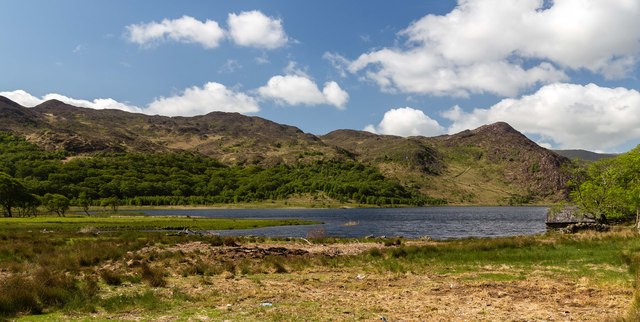
Llyn Dinas is a shallow lake on the floor of the Nant Gwynant valley, a few miles northeast of Beddgelert in Snowdonia, formed and drained by the Afon Glaslyn. It is a quiet spot for low-level walks, taken in on a circular route from Beddgelert, and for trout and salmon fishing.
The wooded hill of Dinas Emrys, tied to old legends of Vortigern and a battle of dragons, rises downstream and gives the lake its name. A calm, easygoing walk that suits a solo day at a gentle pace.
Cymer Abbey
Photo: Jeremy Bolwell via Geograph.org.uk
Cymer Abbey is a small, plain Cistercian abbey ruin near Llanelltyd, close to Dolgellau in the Mawddach valley. What stands is mostly the church, walls of a simple nave with a row of arches and the lower stage of a west tower, while the rest survives as low footings.
It was founded around 1198 and kept a modest, workaday character. Cadw looks after the ruin, which sits on level ground near the head of the estuary.
Its quiet simplicity makes it an easy, reflective stop to have largely to yourself.
Dolwyddelan Castle
Photo: Eric Jones via Geograph.org.uk
Dolwyddelan Castle Llywelyn the Great, prince of Gwynedd, raised this native Welsh castle on a rocky ridge just west of Dolwyddelan village in Snowdonia in the early thirteenth century, to guard a mountain route; Edward I took it in 1283. The rectangular keep that survives was heightened and largely rebuilt during a Victorian restoration in the 1840s, and it stands today with the ruins of a second tower and enclosure walls, looking out over the hills.
Cadw cares for the site. Tradition ties Llywelyn's birth to the spot, though he was more likely born at the earlier Tomen Castell nearby.
Afon Llugwy Pools
Photo: Shaun Ferguson via Geograph.org.uk
Afon Llugwy Pools lie along the river as it runs down past Capel Curig and on toward Betws-y-Coed in Snowdonia, a series of rock pools used for wild swimming and paddling. The best-known pool, with deep, clear water and a rope-swing tree, sits by the bridge at Pont Cyfyng, reached from a car park on the A5.
Water levels change a great deal with the weather. The river carries on downstream over Swallow Falls and past the Miners Bridge nearer Betws-y-Coed.
A peaceful riverside spot to pause on a solo ramble.
Bryn Cader Faner
Photo: Ian Medcalf via Geograph.org.uk
Bryn Cader Faner is a Bronze Age burial cairn on remote high moorland above Talsarnau. It is one of the most striking prehistoric monuments in the country: a low round cairn from which a ring of thin, pointed stones leans outward, so from a distance it looks like a jagged crown against the sky.
Raised around four thousand years ago, its strange crown still stands despite old treasure-hunters and army gunnery damage. Reaching it means a walk of some miles across open, trackless upland, which keeps it wild and solitary, with wide views to the sea.
A haunting, lonely place well worth the solo effort.
St Cybi’s Well
Photo: Alan Fryer via Geograph.org.uk
St Cybi’s Well, in Welsh Ffynnon Gybi, is a medieval holy well in a quiet green valley near the village of Llangybi, on the Llyn peninsula in Gwynedd. Named after a sixth-century saint, it is a cluster of stone well chambers with an adjoining ruined cottage, reached on a short field path from the village and its old church.
The surviving buildings date from the eighteenth and nineteenth centuries, from the days when such wells were visited for their healing waters. It is a free, open site cared for by Cadw, a peaceful, out-of-the-way spot made for a solo pause.
Llyn y Foel
Photo: Gareth Jones via Geograph.org.uk
Llyn y Foel is a small, shallow mountain lake in the cwm below Moel Siabod in Snowdonia, its peaty water lying dark at around 535 metres. It sits on the popular Daear Ddu east-ridge route up the mountain, ringed by rough ground, and its outflow drains toward the Conwy.
It is a remote spot reached only on foot as part of the climb. For a solo walker with the hills to themselves, it makes a quiet, wild place to stop and take in the cwm.
Precipice Walk
Photo: I Love Colour via Geograph.org.uk
Precipice Walk is a well-known circular path that contours around the flanks of the hill of Foel Cynwch, about three miles north of Dolgellau in southern Snowdonia. Rather than climbing over the top, it rings the hill on a nearly level ledge, passing the lake of Llyn Cynwch and giving wide views down the Mawddach estuary toward Barmouth and across to the Cadair Idris ridge.
Some stretches are narrow with steep drops to the side, which is how the walk got its name. It crosses the Nannau estate, with a small car park at the start.
Ideal for an unhurried solo circuit.
FAQs
Which of these gems need a long walk to reach?
Bryn Cader Faner takes a walk of some miles across trackless upland, and Llyn y Foel is reached only on foot as part of the climb up Moel Siabod. Others, such as Cymer Abbey and St Cybi's Well, sit close to a road or village.
Are any of these sites cared for by Cadw?
Yes. Cymer Abbey, Dolwyddelan Castle and St Cybi's Well are all looked after by Cadw. They make good, low-key stops for a solo visitor exploring the region.
When is the best time for the wild swimming pools?
Water levels at the Afon Llugwy pools change a great deal with the weather, so calmer, drier spells are more settled. Always judge conditions for yourself before entering the water.
Conclusion
Snowdonia and Gwynedd give the solo traveller room to breathe, from valley-floor lakes and plain abbey ruins to holy wells and high burial cairns on the open moor. Some of these places sit close to the road and ask only a short stroll, while others need a proper walk into the hills, so check the weather, wear boots that can cope with rough ground, and allow plenty of time.
Move at your own pace, linger where the views open out, and let the old stories of dragons, princes and saints colour the day. Whether you fancy a gentle circuit from Beddgelert or a lonely tramp to a crown of leaning stones, there is something here to suit an unhurried mood.
From still water to windswept ridge, these are the hidden gems to seek out on a solo day in Snowdonia & Gwynedd.