Best Hidden Gems in Tyne & Wear

Written by UK Hidden Gems Editorial
Updated 5 August 2026
The best hidden gems in Tyne & Wear are Backhouse Park, The Grainger Market, Claxheugh Rock, Hendon Beach, Collingwood Monument, The Biscuit Factory, Sunderland Lime Kilns and Arbeia South Shields Roman Fort.
Tyne and Wear packs a great deal of variety into a small corner of north-east England, from the working rivers of the Tyne and the Wear to the limestone coast and the busy centres of Newcastle and Sunderland. This is a region where Roman history sits beside Victorian markets, where wooded valleys give way to industrial shorelines, and where a short walk can take you from a covered market hall to a headland monument looking out to sea.
Some of the best places here are quiet corners that many visitors pass by, such as Backhouse Park in Sunderland, the Grainger Market in Newcastle and Arbeia Roman fort at South Shields. Others reward you with geology, birdlife and coastal views, from Claxheugh Rock above the Wear to the lime kilns at Marsden.
Whether you are drawn to art galleries, parks or ancient ruins, there is plenty to discover away from the well-trodden routes. Here are eight of the best hidden gems to seek out in Tyne & Wear.
Backhouse Park
Photo: Malc McDonald via Geograph.org.uk
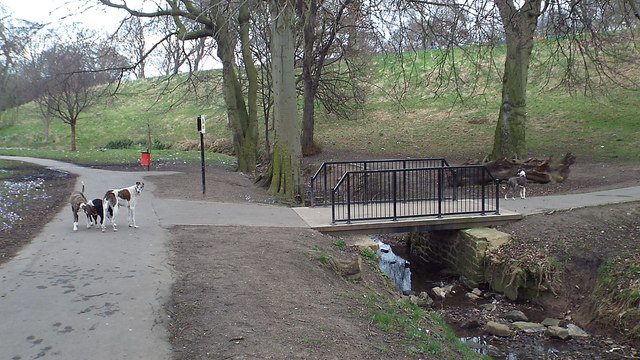
Backhouse Park is a public park set in a wooded valley cut by the Hendon Burn in the Ashbrooke area of Sunderland. Mature trees, spring bulbs and autumn colour give it something of the feel of an arboretum, with paths winding through the valley and a well-known colony of green parakeets living among the branches.
The land was the private garden of the Quaker Backhouse family from 1835, and it passed to the town and opened as a public park in the early 1920s. It sits on the Permian magnesian limestone that runs beneath this coast.
Seek it out for a green, unhurried corner of the city.
The Grainger Market
Photo: Peter McDermott via Geograph.org.uk
The Grainger Market is a large covered Victorian market hall in the centre of Newcastle, opened in 1835 as part of Richard Grainger's grand rebuilding of the city. Beneath its roof, alleys of stalls sell meat, fish, fruit and vegetables alongside street food, cafes and independent shops, more than a hundred businesses in all.
One tiny unit has held a Marks and Spencer stall since 1895, dating from the firm's Penny Bazaar days. It is a listed building, and it was refurbished in the mid-2020s.
Seek it out to browse a working piece of the city's history.
Claxheugh Rock
Photo: Tim Heaton via Geograph.org.uk
Claxheugh Rock is a tall pale cliff on the south bank of the River Wear in western Sunderland, near South Hylton and the old Ford Quarry. Around twenty metres high, it exposes a Permian reef of dolomite limestone resting on soft yellow sandstone, and it is the type site for this rock formation, important enough to geologists to be a protected site.
Visitors see a buff-coloured cliff rising above the riverside, reached from the path along the Wear, with peregrines and estuary birds often seen around it. Seek it out for a quiet spot of geology and river views.
Hendon Beach
Photo: Oliver Dixon via Geograph.org.uk
Hendon Beach is a strip of sand and shingle on the Sunderland coast just south of the docks, backed by a sea wall and promenade with wooden groynes and rock defences. The outlook is over the working port and its industrial buildings rather than open countryside, and the England Coast Path runs along the front.
It is a plain, urban beach in an area that has seen regeneration, with Grangetown Beach a short way further south. Seek it out for a bracing coastal walk with a working harbour for company.
Collingwood Monument
Photo: George Robinson via Geograph.org.uk
Collingwood Monument stands on the headland at Tynemouth, above the mouth of the River Tyne. A stone statue of Admiral Lord Collingwood, Nelson's second-in-command at Trafalgar, looks out to sea from the top of a tall stone base.
Four cannons from his flagship line the steps at its foot. It is a landmark for ships coming into the Tyne and for walkers along the shore.
Seek it out for wide views over the river mouth and the open sea.
The Biscuit Factory
Photo: Andrew Curtis via Geograph.org.uk
The Biscuit Factory is a commercial art gallery set in a Victorian warehouse in the Ouseburn area of Newcastle, on a site once used to make biscuits, which gives it its name. Spread over several floors, it shows paintings, prints, sculpture, furniture, jewellery and homeware, most of it by local and national makers and for sale, with a bookshop and a cafe with a rooftop terrace.
It has been a gallery since 2002, entry is free, and it also runs workshops and events. Seek it out for an easy hour among the work of contemporary makers.
Sunderland Lime Kilns
Photo: Malcolm Neal via Geograph.org.uk
Sunderland Lime Kilns are the Marsden Lime Kilns, a great bank of Victorian limestone-burning kilns set into the side of an old quarry at Marsden, on the coast at South Shields. Built in the 1870s, the row of brick-arched kilns burned limestone into quicklime, served by a colliery railway known as the Marsden Rattler, and worked until 1968.
The kilns are fenced off but seen from the coast road, and the quarry behind them is now a nature reserve, its cliffs alive with seabirds. The well-known Marsden Rock and the cliff-foot Grotto lie close by.
Seek them out for coastal industry and seabird cliffs.
Arbeia South Shields Roman Fort
Photo: Steve Daniels via Geograph.org.uk
Arbeia South Shields Roman Fort stands on a hill above the mouth of the Tyne at South Shields, a Roman fort now ringed by streets and houses. What sets it apart are the full-size reconstructions raised on the original Roman foundations: a tall twin-towered west gate you can climb, a commanding officer's house and a barrack block.
Around them lie the excavated footings of the fort, including the granaries that mark it out as a supply base for the army on Hadrian's Wall. Among the finds is the tombstone of Regina, a British woman freed from slavery and married to Barates, a trader from Palmyra.
Seek it out to climb the walls above the Tyne.
FAQs
What are the best hidden gems in Tyne and Wear?
Standout spots include Arbeia Roman Fort at South Shields, the Grainger Market in Newcastle, Backhouse Park in Sunderland and the Collingwood Monument at Tynemouth. Together they cover history, markets, parks and coastal views across the region.
Is Arbeia Roman Fort worth visiting?
Yes, Arbeia is notable for its full-size reconstructions raised on the original Roman foundations, including a twin-towered west gate you can climb. Displays include the tombstone of Regina, and from the walls you look out over the Tyne.
Where can I find quiet green spaces in Tyne and Wear?
Backhouse Park in Sunderland offers a wooded valley with a colony of green parakeets, while the nature reserve behind the Marsden Lime Kilns brings seabird cliffs. Both give a quieter side of the region away from the town centres.
Conclusion
From ancient Roman walls to Victorian market halls, Tyne and Wear rewards anyone willing to look beyond the obvious. The region draws together wooded parks, working beaches, striking geology and living pieces of art and industry, all within easy reach of Newcastle, Sunderland and the coast.
You can spend a morning tracing the Wear past Claxheugh Rock, an afternoon among the stalls of the Grainger Market, and an evening watching the sea from the Collingwood Monument at Tynemouth. Each of these places tells part of the wider story of the two rivers and their people, and each rewards the short effort it takes to find it.
Whether your interest is history, wildlife or a quiet green corner, these are the best hidden gems to seek out in Tyne & Wear.