Best Places to Visit in Cardiff & the Vale of Glamorgan

Written by UK Hidden Gems Editorial
Updated 5 August 2026
The best places to visit in Cardiff & the Vale of Glamorgan are Aberthaw Lime Works, Tresilian Bay Beach, East Orchard Castle, Flat Holm Isolation Hospital, Llantwit Major Beach, Castell Coch and Tinkinswood Burial Chamber.
Cardiff and the Vale of Glamorgan pair a green Heritage Coast with castles old and new and some very ancient stones. The showpiece is Castell Coch, its round towers capped with tall conical roofs rising from beech woods above Tongwynlais, a Victorian fantasy raised on a medieval ruin.
Older by far is Tinkinswood, a Neolithic burial chamber near St Nicholas under one of the largest capstones in Britain, and East Orchard Castle keeps its manor ruins on the low ground near St Athan. The coast runs from the rock-pooled beach at Llantwit Major and the cave-backed cove of Tresilian Bay to the derelict lime works at Aberthaw, while out in the Bristol Channel the island of Flat Holm holds its ruined cholera hospital, lighthouse and old gun batteries.
Some are grand set pieces, others quiet ruins and shores. Here are seven places to visit across Cardiff and the Vale of Glamorgan.
Aberthaw Lime Works
Photo: Eirian Evans via Geograph.org.uk
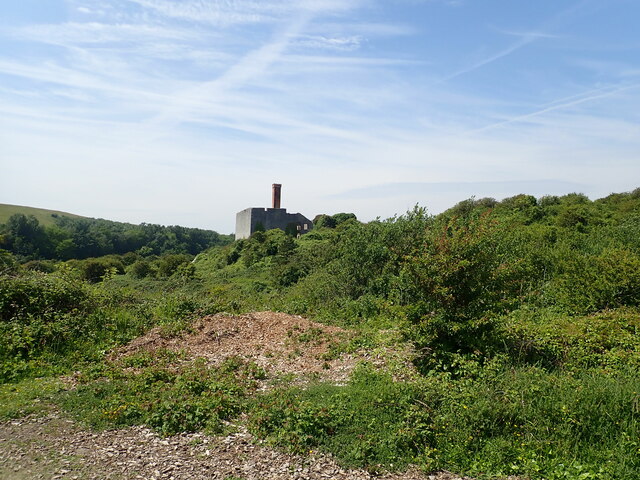
Aberthaw Lime Works is a derelict nineteenth-century lime-burning site on the Glamorgan coast near Aberthaw, close to the Wales Coast Path. The main survivor is a stone structure some twenty metres tall holding tall draw-kilns, with brick-lined openings and stone tunnels, along with a chimney.
It burned local coastal limestone from 1888 until it closed in 1926, and it is now a listed ruin reached on foot from the sea wall, with no facilities. It should not be confused with the separate, larger Aberthaw cement works nearby.
Tresilian Bay Beach
Photo: Alan Hughes via Geograph.org.uk
Tresilian Bay is a quiet pebble and rock cove on the Glamorgan Heritage Coast, tucked between Llantwit Major and St Donat's. Limestone cliffs riddled with caves back the beach, and a stream runs down the valley to the sea.
Its best-known feature is a large cave with a natural rock arch, tied to a local courtship legend in which couples throw pebbles up at the arch. Most people reach it on foot along the cliffs from the beach car park at Llantwit Major, as there are no facilities on the sand.
East Orchard Castle
Photo: Alan Hughes via Geograph.org.uk
East Orchard Castle is the ruin of a medieval manor house in the Vale of Glamorgan, near St Athan, standing on low ground above the River Thaw. Fragments survive of a large hall block, with windows and fireplaces still visible, along with a long chapel, a barn and a well-preserved stone dovecote.
It was held by the Berkerolles family and later the Stradlings, and fell out of use in the eighteenth century. It sits on private farmland, an obscure and little-visited ruin.
Flat Holm Isolation Hospital
Photo: Alan Hughes via Geograph.org.uk
The isolation hospital on Flat Holm is a ruined Victorian building on a small island in the Bristol Channel off Cardiff, built in the 1890s to hold cholera cases arriving by ship. It had two wards and a nurse's room, closed in the 1930s and has stood derelict since, though work has begun to stabilise and re-roof it.
The island also carries a lighthouse, a foghorn station and old Victorian gun batteries. It is a nature reserve reached by boat, with day trips in the season.
Llantwit Major Beach
Photo: Mick Lobb via Geograph.org.uk
Llantwit Major Beach lies at the mouth of the valley of Cwm Col-huw on the Glamorgan Heritage Coast, the beach for the town of Llantwit Major. At low tide there is sand and plenty of rock pools, all set below tall cliffs of layered limestone and shale.
A cliff-top nature reserve runs west along the coast, and the beach is popular with families and surfers. There is a car park, a cafe and toilets, and dogs are welcome through the winter months.
Castell Coch
Photo: John Lord via Geograph.org.uk
Castell Coch rises out of steep beech woodland on the hillside above Tongwynlais, north of Cardiff. Three round towers capped with tall, pointed conical roofs give it the look of a storybook castle among the trees.
The Victorian architect William Burges rebuilt it from 1868 for the third Marquess of Bute, raising it on the remains of a much older medieval castle. Inside, the painted drawing room and banqueting hall keep the richly decorated scheme he designed.
Tinkinswood Burial Chamber
Photo: David Smith via Geograph.org.uk
Tinkinswood is a Neolithic burial chamber in the countryside of the Vale of Glamorgan, near St Nicholas a few miles west of Cardiff. Its great feature is an enormous capstone, one of the largest in Britain, a single slab weighing around forty tons resting on upright stones, over a chamber where the bones of dozens of people were found.
It was raised around six thousand years ago and would once have been covered by a long earthen mound, whose outline still shows. It is a free, open site cared for by Cadw, reached on a short walk across a field, with the smaller St Lythans tomb close by.
FAQs
Why does Castell Coch near Cardiff look like a fairytale castle?
Castell Coch looks like a storybook castle because the Victorian architect William Burges rebuilt it from 1868 for the third Marquess of Bute, raising three round towers capped with tall, pointed conical roofs on the remains of a medieval castle in beech woodland above Tongwynlais. Inside, the painted drawing room and banqueting hall keep the richly decorated scheme he designed.
How old is Tinkinswood burial chamber?
Tinkinswood was raised around six thousand years ago, in the Neolithic, near St Nicholas west of Cardiff. Its huge capstone, one of the largest in Britain, weighs around forty tons and covers a chamber where the bones of dozens of people were found, once buried under a long earthen mound whose outline still shows.
Can you visit Flat Holm island?
Yes. Flat Holm, a small island in the Bristol Channel off Cardiff, is a nature reserve reached by boat, with day trips in the season. It holds a ruined Victorian isolation hospital built for cholera cases, along with a lighthouse, a foghorn station and old Victorian gun batteries.
Conclusion
Cardiff and the Vale of Glamorgan run from Victorian fantasy to ancient stone. Castell Coch raises its conical towers from the beech woods above Tongwynlais, while Tinkinswood shelters the bones of dozens under one of Britain's largest capstones, and East Orchard keeps its quiet manor ruins near St Athan.
The Heritage Coast offers the rock pools of Llantwit Major, the cave-backed cove of Tresilian Bay and the gaunt lime works at Aberthaw, and out in the Bristol Channel the island of Flat Holm holds its ruined cholera hospital and old batteries. From storybook castle to island ruin, these are the places to seek out across Cardiff and the Vale of Glamorgan.