England's Best Ruined Abbeys

Written by UK Hidden Gems Editorial
Updated 5 August 2026
The england's Best Ruined Abbeys include Prittlewell Priory, Bayham Old Abbey, Creake Abbey Ruins, Beeston Regis Priory, Godstow Abbey, Waverley Abbey, Rievaulx Abbey and Netley Abbey.
Across England, the broken walls of the monasteries dissolved by Henry VIII still stand in quiet corners of the countryside, roofless and green with age. These ruined abbeys and priories range from the great to the humble, and many sit well away from the crowds.
In the south-east, Prittlewell Priory survives as a museum in an Essex park, Bayham Old Abbey rises among trees on the Kent and Sussex border, and Waverley in Surrey marks the very first Cistercian house in the country. Norfolk holds two lovely fragments, the flint east end of Creake Abbey and the meadow ruins of Beeston Regis near the coast.
Beside the Thames outside Oxford lie the scant remains of Godstow, tied to the tale of Fair Rosamund, while near Southampton the walls of Netley stand almost complete among the woods. Farthest north, in a wooded Yorkshire valley, Rievaulx Abbey ranks among the most complete and moving monastic ruins in the land.
Here are eight ruined abbeys to seek out across England.
Prittlewell Priory
Photo: terry joyce via Geograph.org.uk
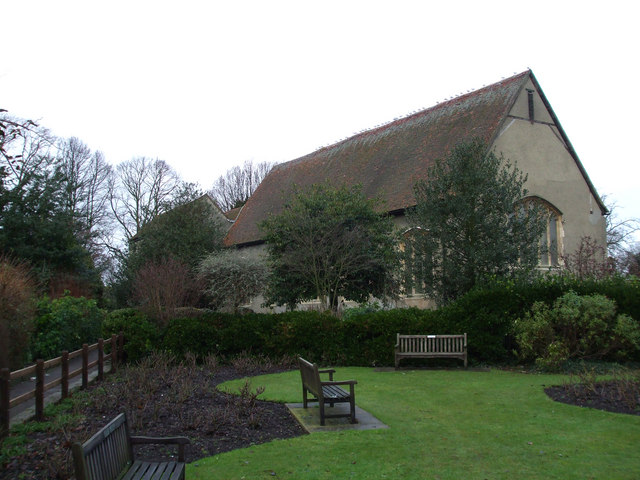
Visit Prittlewell Priory Set in Priory Park at Southend-on-Sea in Essex, Prittlewell Priory is the surviving part of a small medieval Cluniac monastery, now a museum. Founded in the twelfth century as a cell of Lewes Priory and closed by Henry VIII in 1536, most of it survives as foundations, though the refectory with its old crown-post roof, a prior's chamber and a carved Norman doorway remain.
Given to the town, it opened as Southend's first museum in 1922 and was refurbished in 2012. The park around it has gardens, and an Anglo-Saxon burial ground was found nearby.
Bayham Old Abbey
Photo: Trevor Harris via Geograph.org.uk
Explore Bayham Old Abbey In a wooded valley of the River Teise, on the border of Kent and East Sussex near Lamberhurst, Bayham Old Abbey is a handsome and substantial medieval ruin, with tall walls, carved stonework and the empty stone frames of great windows still standing among the trees. It belonged to the Premonstratensian order, the so-called white canons, founded around 1208 by joining two struggling houses together.
Cardinal Wolsey closed it in 1525, well before the main dissolution, and later its ivy-clad ruins were made a feature of a landscaped park. Today it is a quiet, green place, free to walk around, the broken arches rising from mown grass.
Creake Abbey Ruins
Photo: Sandy Gerrard via Geograph.org.uk
Discover Creake Abbey Ruins At North Creake in Norfolk, standing free and open in the fields near Burnham Market, Creake Abbey is the atmospheric ruin of a medieval abbey. What survives is mostly the flint-walled east end of the church, several bays of it still rising close to full height, with blocked arches and empty windows tracing the old shape.
The small community here dwindled after a fire, and then disease carried off the last of the monks by the early 1500s. English Heritage keeps the ruins today, with a courtyard of cafe and shops standing alongside them.
Beeston Regis Priory
Photo: Evelyn Simak via Geograph.org.uk
See Beeston Regis Priory Standing free in a meadow near Sheringham, on the north Norfolk coast, Beeston Regis Priory is a ruined medieval priory whose roofless walls of flint and stone rise from the grass, tracing the church and the ranges around it, with the tall north wall of the nave near its full height. This small Augustinian house was founded around 1216 and closed at the dissolution in 1538, and it is noted for its early use of brick alongside the flint.
The ruins are open and free to walk among, quiet and low-key, with old monastic ponds surviving nearby and fields running down toward the sea.
Godstow Abbey
Photo: Sarah Charlesworth via Geograph.org.uk
Wander to Godstow Abbey On the bank of the Thames near Wolvercote, just outside Oxford and close to the Trout Inn, Godstow Abbey is the ruin of a medieval nunnery. Little survives above ground beyond one small two-storey building in the corner of the old cloister and lengths of the precinct wall, set in a riverside field.
It was founded in the 1130s and pulled down after the Dissolution, its converted buildings later burned in the Civil War. The abbey is best known as the resting place of Fair Rosamund, mistress of Henry II.
Waverley Abbey
Photo: Richard Croft via Geograph.org.uk
Waverley Abbey A vaulted undercroft from the lay brothers' quarters, the tall walls of the monks' dormitory and parts of the chapter house still stand in open meadow beside the River Wey, southeast of Farnham in Surrey. This was the first Cistercian monastery founded in England, begun in 1128 and left to crumble after Henry VIII closed it in 1536.
English Heritage cares for the ruin, which is free to visit and sits quite apart from the later Waverley Abbey House next door. A peaceful riverside spot for anyone drawn to the beginnings of monastic England.
Rievaulx Abbey
Photo: John Baker via Geograph.org.uk
Rievaulx Abbey Founded in 1132, this Cistercian house grew into one of the wealthiest abbeys in England before Henry the Eighth dissolved it in 1538. Its great ruin now fills a wooded valley of the River Rye near Helmsley in North Yorkshire, counted among the most complete and atmospheric monastic remains in the country.
Tall, roofless walls of the church and the ranges around the cloister still stand, and you can walk among them freely. A museum on site gathers finds from the monks' daily lives, with a cafe and shop nearby.
English Heritage cares for the whole site.
Netley Abbey
Photo: Barry Shimmon via Geograph.org.uk
Netley Abbey Few ruins have led as many lives as this one near Southampton. Cistercian monks raised it in 1239, Henry VIII shut it down in 1536, and a Tudor owner then made it a grand house before time turned the whole thing back into a scenic wreck.
What survives is impressive: almost all the walls of its thirteenth-century church, along with the cloister ranges, chapter house and monks' quarters, making it the most complete abbey of its order in southern England, all wrapped about with woodland. English Heritage looks after the site, and daylight visits are free.
Tread carefully around the open ground and the unfenced walls.
FAQs
Which ruined abbey is the most complete?
Two stand out in England: Rievaulx in North Yorkshire is among the most complete and atmospheric monastic ruins in the country, while Netley near Southampton is the most complete surviving Cistercian abbey in southern England.
Are these abbeys free to visit?
Many are, including Bayham Old Abbey on the Kent and Sussex border, Creake and Beeston Regis in Norfolk, Waverley in Surrey and Netley in Hampshire, all open without charge. Prittlewell Priory in Essex is now a museum.
What was Godstow Abbey known for?
Godstow, a ruined nunnery beside the Thames outside Oxford, is best known as the resting place of Fair Rosamund, mistress of Henry II. Founded in the 1130s, it was pulled down after the Dissolution.
Conclusion
England's ruined abbeys carry a quiet power, their empty windows and broken arches framing the sky where roofs once stood. From the great church of Rievaulx in its Yorkshire valley to the humble foundations of Godstow beside the Thames, each tells the story of the monastic life that Henry VIII brought to an end.
The south-east is especially rich, with Bayham on the Sussex border, Waverley in Surrey and Prittlewell in its Essex park, while Norfolk keeps the flint fragments of Creake and Beeston Regis, and Netley stands almost whole in its Hampshire woods. Most are free, peaceful and easy to reach yet blissfully uncrowded.
Choose a still morning, bring a flask, and let the ruins work their spell: these are the ruined abbeys to seek out across England.