Best Places to Visit in Fermanagh Lakelands

Written by UK Hidden Gems Editorial
Updated 5 August 2026
The best places to visit in Fermanagh Lakelands are Drummoney Falls, Killyfole Lough, Marble Arch Caves, Hanging Rock of Fermanagh, Tully Castle, Little Dog Viewpoint, Blackslee Waterfall and Pollnagollum Cave.
The Fermanagh Lakelands wrap a green county around the waters of Lough Erne, with limestone caves, forest waterfalls and lakeshore castles hidden among the drumlins. The set piece is the Marble Arch Caves near Florencecourt, the longest cave system in Northern Ireland, toured partly by boat along an underground river, while a second cave at Pollnagollum in Belmore Forest takes its stream over a cliff and out of sight.
Water drops through the forests at Blackslee in Lough Navar and at the roadside cascades of Drummoney near Kesh. On the shore of Lower Lough Erne, ruined Tully Castle keeps its walled enclosure, and the overhanging Hanging Rock leans above its wooded loop road near Belcoo.
For a walk, the Big Dog forest climbs to the Little Dog viewpoint, and a gentle loop rings Killyfole Lough. Some are grand show caves, others quiet forest corners.
Here are eight places to visit across the Fermanagh Lakelands.
Drummoney Falls
Photo: Derek Henry via Geograph.org.uk
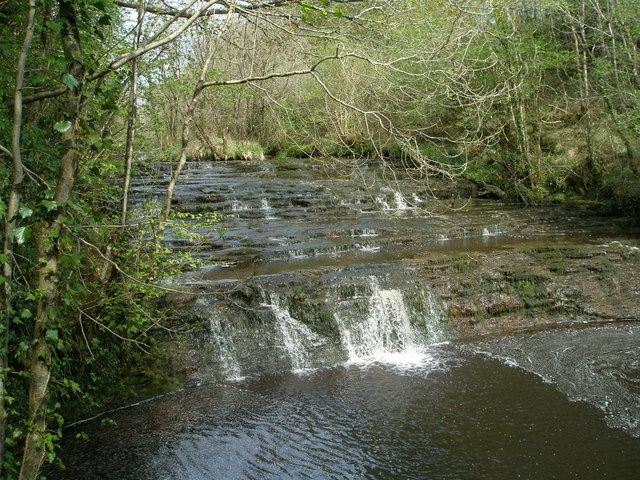
Drummoney Falls is a small waterfall on the Bannagh River in wooded country in County Fermanagh, a few miles north of Kesh toward Pettigo. A short path with stone steps leads down from a small car park on Derrybrick Road to a set of stepped cascades over peat-stained rock.
It is modest in dry weather and much fuller after heavy rain. It is a brief walk and photo stop rather than a long outing.
Killyfole Lough
Photo: Kenneth Allen via Geograph.org.uk
Killyfole Lough is a small lough in the drumlin country of east County Fermanagh, between Lisnaskea and Rosslea. A waymarked loop of a mile and a half runs around it, mostly flat, on paths, track and boardwalk, with a bird hide and fishing stands along the way.
Reedbeds, open water and wet woodland make it good for birds, and an old crannog shows in the water when the level drops. Parking and picnic spots serve the quiet reserve.
Marble Arch Caves
Photo: Rossographer via Geograph.org.uk
Marble Arch Caves are a system of limestone show caves near Florencecourt in County Fermanagh, the longest known caves in Northern Ireland. A tour often begins with a boat trip along an underground river before a walk on lit paths through chambers to a deep lake.
Three streams sinking off the slopes of Cuilcagh mountain join underground to form the river that runs through the caves. Above ground the site is part of a UNESCO geopark, with walks in the glen, and the caves first opened to visitors in 1985.
They can close after heavy rain when the passages flood.
Hanging Rock of Fermanagh
Photo: Kenneth Allen via Geograph.org.uk
The Hanging Rock is a great overhanging limestone cliff in the Marlbank country near Belcoo in County Fermanagh, a long-known landmark on the road below. Damp ash woodland grows beneath the crag, a scarce and protected habitat, with springs rising at the foot of the cliff.
It forms part of a nature reserve within the wider geopark of caves and limestone country. The overhang leans out above the trees along the scenic loop road.
Tully Castle
Photo: Michael Dibb via Geograph.org.uk
Tully Castle stands on a point on the southern shore of Lower Lough Erne in County Fermanagh, a ruined fortified house from the early 1600s with a walled defensive enclosure and corner towers. A Scottish planter, Sir John Hume, had it built in the 1610s.
It is now a state-care monument with free entry, a small visitor centre in a restored farmhouse, and a garden laid out in the seventeenth-century style, while the walls and enclosure survive as consolidated ruins. The castle was attacked and burned during the rebellion of 1641 and never lived in again.
Little Dog Viewpoint
Photo: Brian Nelson via Geograph.org.uk
Little Dog is a summit within Big Dog Forest, a large coniferous forest at Scribbagh near Belleek in County Fermanagh, in the uplands above Lower Lough Erne. Big Dog and Little Dog are two hills of hard sandstone left standing above softer, more worn-down rock, and local folklore names them after the wolfhounds of Finn MacCool.
A waymarked walk of about four kilometres climbs on forest tracks and rougher paths, with a short off-track pull up to the top of Little Dog, where the view opens out over the surrounding lakes and countryside. A quiet woodland picnic area sits along the way, and red deer and Irish hares live in the forest.
Blackslee Waterfall
Photo: Kenneth Allen via Geograph.org.uk
Blackslee Waterfall is a fall deep in Lough Navar Forest, in the lakeland country of County Fermanagh. The water drops around twenty metres over a rock cliff into a wooded gorge, cut through layers of sandstone with a dark band of harder igneous rock running through them, on its way down toward Lower Lough Erne.
Around it the forest is thick and quiet, part of a wider landscape of woods, cliffs and lakes now recognised as a geopark. Reaching the fall is a walk of a few miles on forest tracks and paths, with some steps and rougher ground near the gorge, the sound of it carrying through the woods before you see it.
Pollnagollum Cave
Photo: N Chadwick via Geograph.org.uk
Pollnagollum is a cave in Belmore Forest in County Fermanagh, where a stream pours over a limestone cliff and vanishes into the cave mouth below. A viewing platform faces the waterfall and cave entrance, reached on a forest walk with some slippery steps at the end, or as part of a longer waymarked loop of about four and a half miles.
The water drops around twelve metres before going underground, to reappear over a mile away. This is the Fermanagh cave of the name, not the better-known one in County Clare, and it was used as a filming location for Game of Thrones.
FAQs
Which places in the Fermanagh Lakelands are easiest to visit, and which need a walk?
The Marble Arch Caves and Tully Castle are the easiest places to visit in the Fermanagh Lakelands, set up for visitors with tours, parking and centres, and Killyfole Lough has a flat, mostly level loop. Blackslee and Pollnagollum both need a forest walk of a few miles with rougher steps near the gorge, so they suit those happy to walk in.
Where can you see wildlife and birds in the Fermanagh Lakelands?
Killyfole Lough is the best spot for birds in the Fermanagh Lakelands, a quiet reserve of reedbeds and open water with a bird hide, and the Big Dog forest around the Little Dog viewpoint holds red deer and Irish hares. The Hanging Rock reserve near Belcoo protects a scarce damp ash woodland below its crag.
Does Drummoney Falls run all year?
Drummoney Falls runs year-round, but its flow varies a lot with the weather, modest in dry spells and much fuller after heavy rain. The Marble Arch Caves themselves can also close after heavy rain when the passages flood, so a settled spell suits the caves while the falls are at their best after rain.
Conclusion
The Fermanagh Lakelands hide caves, waterfalls and castles among the waters of Lough Erne. The Marble Arch Caves run longest in Northern Ireland, toured by boat and lit path near Florencecourt, while a second Pollnagollum takes its stream underground in Belmore Forest.
Water drops through the forests at Blackslee and at roadside Drummoney near Kesh. On the lough shore, ruined Tully Castle keeps its walled enclosure and the Hanging Rock leans above its loop road near Belcoo, while the Big Dog forest climbs to the Little Dog viewpoint and a gentle loop rings Killyfole Lough.
From show cave to quiet forest fall, these are the places to seek out across the Fermanagh Lakelands.