Best Places to Visit Near Inverness

Written by UK Hidden Gems Editorial
Updated 5 August 2026
The best places to visit near Inverness are Dores Beach, Loch Duntelchaig, Dolphin spotting at Chanonry Point, Loch Ruthven, Culnaskiach Falls, Falls of Orrin, Urquhart Castle and Rait Castle.
Inverness stands at the head of the Moray Firth, the capital of the Highlands and the natural gateway to Loch Ness and the Great Glen. The variety of country within easy reach is striking, from long lochs and hidden waterfalls to castle ruins and one of Britain's finest spots for watching wild dolphins.
Just south-west of the city, along the shore of Loch Ness, lie the shingle at Dores Beach and, a little further on, the ruined Urquhart Castle. In the quiet hills nearby you will find the swimming water of Loch Duntelchaig and the bird reserve at Loch Ruthven.
To the west, two waterfalls repay the effort of finding them: Culnaskiach Falls in its forest gorge and the Falls of Orrin near Muir of Ord. North across the water on the Black Isle, Chanonry Point draws crowds hoping to see bottlenose dolphins, while eastward towards Nairn stands the rare hall-house ruin of Rait Castle.
Here are eight places to visit near Inverness.
Dores Beach
Photo: Anne Burgess via Geograph.org.uk
Dores Beach A short drive south-west of Inverness brings you to Dores, where a long shingle beach sits at the north-eastern end of Loch Ness. From here the view runs straight down the length of the loch along the line of the Great Glen, one of the classic Loch Ness scenes.
The Dores Inn stands right beside the beach for food and drink after a stroll along the shingle. This spot has a quirky claim too: a full-time monster watcher has kept a caravan nearby for many years, keeping a patient eye on the water for any sign of movement below the surface.
Loch Duntelchaig
Photo: Mike Pennington via Geograph.org.uk
Loch Duntelchaig Tucked into the hills south-west of the city, and east of Loch Ness, Loch Duntelchaig runs for several miles between low crags. Its clear water draws wild swimmers, while the gneiss crags along the shore are an established rock-climbing venue, though restrictions apply in spring and summer to protect nesting peregrines.
The loch also plays a practical role, forming part of the water supply for Inverness itself. Quiet minor roads run along either side, so it stays peaceful even when Loch Ness nearby is busy.
It makes a lovely, low-key place to swim, scramble or simply sit by the water.
Dolphin spotting at Chanonry Point
Photo: Bill Harrison via Geograph.org.uk
Dolphin spotting at Chanonry Point North of Inverness, out on the Black Isle, Chanonry Point is a low shingle spit reaching into the Moray Firth between Fortrose and Rosemarkie. It ranks among the best places in Britain to watch wild dolphins straight from the shore.
Bottlenose dolphins come in close on a rising tide, chasing fish through the narrows opposite Fort George, and can pass just yards from the beach. A small white lighthouse marks the tip of the point.
Be warned that the parking is limited and fills up quickly when the dolphins are running, so it pays to arrive early and time your visit with the incoming tide.
Loch Ruthven
Photo: Anne Burgess via Geograph.org.uk
Loch Ruthven Also to the south-west, Loch Ruthven lies quietly among heather hills, fringed with sedge beds and run as an RSPB reserve. It is one of the most important places in Britain for the Slavonian grebe, a small crested diving bird best seen in spring in its breeding colours from a hide at the end of a short, mostly level trail.
Willow warblers and tree pipits are among the other birds around the water, and the remains of an old crannog sometimes show above the surface when the level drops. There is a small car park, with a walk of around half a kilometre to reach the hide.
Culnaskiach Falls
Photo: valenta via Geograph.org.uk
Culnaskiach Falls West of Inverness, in Boblainy Forest south of Kiltarlity, Culnaskiach Falls is a waterfall for those who like to work a little for their reward. Here a burn drops off a grey rock face into a narrow gorge, modest in dry weather but forceful after heavy rain.
It can be reached only on foot, along forest tracks that eventually fade into a rough and sometimes pathless route, with a burn to cross on the way. This is very much an out-of-the-way fall for confident walkers rather than a signposted attraction, so come prepared and pick a day after rain to see it at its best.
Falls of Orrin
Photo: Gordon Brown via Geograph.org.uk
Falls of Orrin North-west of the city, near Muir of Ord, the Falls of Orrin drop some fifteen metres through a gorge on the River Orrin, on the Fairburn estate. This is a salmon river, and the falls act as a leap where the fish climb upstream, helped along by an old fish ladder built for a Victorian hydro scheme.
Ruined and revived hydro structures still stand around the gorge, a reminder of that earlier industry. A circular walk on the estate leads to the falls, taking you through quiet country well away from the main tourist routes, and it makes a rewarding half-day out in the hills.
Urquhart Castle
Photo: Tom Page via Geograph.org.uk
Urquhart Castle Back on the shore of Loch Ness, near Drumnadrochit, Urquhart Castle stands in ruins on a rocky point jutting into the water. Its remains span the 13th to the 16th centuries and take in a gatehouse, a great hall and the five-storey Grant Tower, which still rises above the loch.
Historic Environment Scotland runs it as a ticketed, year-round site, with a visitor centre built into the bank, a shop, a cafe and a replica trebuchet out on the grounds. The dramatic setting beside the loch means it draws large numbers of visitors, so an early or late slot is the quietest time to go.
Rait Castle
Photo: Jean Aldridge via Geograph.org.uk
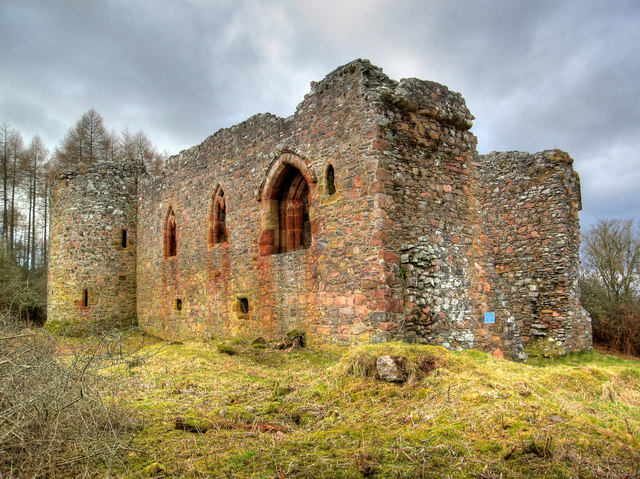
Rait Castle To the east, in farmland south of Nairn, Rait Castle is an unusual ruined hall-house built of granite in the late thirteenth or early fourteenth century. Rather than a tall tower, it takes the form of a first-floor hall block with a round tower at one corner, and its roofless shell still keeps a fine traceried window and the remains of a courtyard wall.
This is a remote, little-visited ruin, reached on foot across the fields, free to see and unstaffed. Its age and rare hall-house form make it an unusual survival among Scottish castles, and a quiet find for anyone who enjoys history off the beaten track.
FAQs
Where is the best place near Inverness to see dolphins?
Chanonry Point on the Black Isle, about 13 kilometres north of Inverness, is among the best spots in Britain to watch wild bottlenose dolphins from the shore. They come closest on a rising tide, so check the tide times before you set off.
Can you go wild swimming near Inverness?
Yes. Loch Duntelchaig in the hills south-west of Inverness has clear water popular with wild swimmers, and Dores Beach on Loch Ness offers a shingle shore for a bracing dip.
Which castle near Inverness is worth visiting?
Urquhart Castle on the shore of Loch Ness is the best known, with its towers, visitor centre and dramatic setting. For something quieter, the ruined hall-house of Rait Castle near Nairn sees far fewer visitors.
Conclusion
From the shores of Loch Ness to the dolphin waters of the Moray Firth, the Highland country around Inverness packs an extraordinary range into a small area. Dores Beach and Urquhart Castle sit along the loch to the south-west, while the quiet lochs of Duntelchaig and Ruthven reward those who like their water still and their birdlife close.
West of the city, Culnaskiach Falls and the Falls of Orrin hide in their wooded gorges for walkers to seek out. North on the Black Isle, Chanonry Point offers some of Britain's finest dolphin watching, and east towards Nairn the granite ruin of Rait Castle stands quietly in the fields.
Lochs, waterfalls, castles and wildlife: whatever draws you north, these are the places to visit near Inverness.