Hidden Gems Near Inverness

Written by UK Hidden Gems Editorial
Updated 5 August 2026
The hidden gems near Inverness are Loch Duntelchaig, Dolphin spotting at Chanonry Point, Loch Ruthven, Macfarquhar's Bed, Fyrish Monument, Dulsie Bridge, Foyers Falls and Loch Glass.
Inverness makes a natural launch pad for the lochs, coasts and hills of the central Highlands, and these hidden gems reach out in every direction. To the south-west lie two lovely stretches of water, Loch Duntelchaig, good for a wild swim, and the RSPB reserve at Loch Ruthven with its rare grebes.
Across on the Black Isle you can watch wild dolphins from the shingle at Chanonry Point, or take the longer coastal walk to the arch and cave of Macfarquhar's Bed near Cromarty. A few of these are more of a day trip: the Fyrish Monument crowns a hill above Alness, remote Loch Glass sits below Ben Wyvis, Dulsie Bridge arches over the Findhorn near Nairn, and the Falls of Foyers drop to the shore of Loch Ness.
From easy shoreline strolls to hill walks and quiet swims, there is plenty to draw you out. Here are eight hidden gems to seek out near Inverness.
Loch Duntelchaig
Photo: Mike Pennington via Geograph.org.uk
Loch Duntelchaig Clear enough to help supply Inverness with its drinking water, this long loch draws wild swimmers to its cold, glassy stretches, running for several miles between low crags in the hills southwest of the city. Those crags matter too: their rough gneiss makes an established climbing ground, though holds are off-limits through spring and summer while peregrines nest on the ledges above.
It lies just east of Loch Ness yet stays a world quieter, with only narrow minor roads threading along either shore. For a swim, a scramble or an unhurried drive within easy reach of town, it is hard to better.
Dolphin spotting at Chanonry Point
Photo: Bill Harrison via Geograph.org.uk
Dolphin spotting at Chanonry Point On a rising tide the bottlenose dolphins swing in close, herding fish through the narrows opposite Fort George and surfacing barely yards from where you stand on the shingle. This low spit runs out into the Moray Firth from the Black Isle, between Fortrose and Rosemarkie, and ranks among the finest places in Britain to watch wild dolphins without a boat.
A small white lighthouse marks the very tip. The catch is parking, which is scarce and gone early whenever word gets round that the dolphins are running, so time your arrival with the incoming water.
Loch Ruthven
Photo: Anne Burgess via Geograph.org.uk
Loch Ruthven Come in spring and you may catch the Slavonian grebe here in its breeding finery, crested and jewel-eyed, on one of its most important strongholds anywhere in Britain. This quiet freshwater loch lies among heather hills southwest of Inverness, fringed with sedge and run as an RSPB reserve, its grebes best watched from a hide at the end of a short, level trail.
Willow warblers and tree pipits work the shore too, and when the water drops, the bones of an old crannog sometimes surface offshore. A small car park marks the start, with about half a kilometre to walk to the hide, so pack the binoculars.
Macfarquhar's Bed
Photo: Julian Paren via Geograph.org.uk
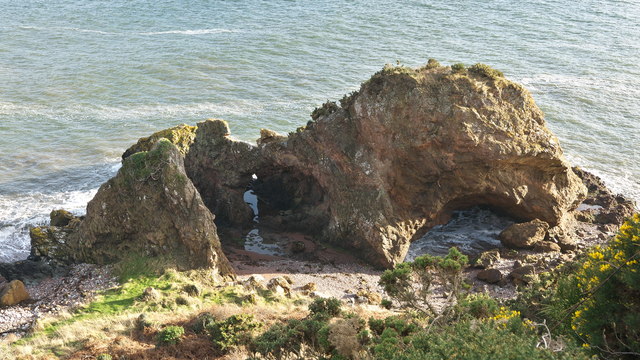
Walk to Macfarquhar's Bed A rocky cove on the South Sutor headland, a couple of miles along the coast from Cromarty on the Black Isle. Cliffs enclose a small bay where a natural arch has been cut through the rock, with a cave alongside, and the ruined huts of an old salmon-fishing station stand at the shore.
It is reached on a coastal walk from Cromarty, the path dropping steeply through a beech avenue to the sea, with views over the Cromarty Firth where dolphins are often seen. The name comes down from a smuggling tale whose details are long lost.
Fyrish Monument
Photo: Julian Paren via Geograph.org.uk
Hike up to the Fyrish Monument This one is a bit further afield, standing on the open top of Fyrish Hill above Alness in Easter Ross, a row of stone arches and pillars set against the sky. It was built in the 1780s for General Sir Hector Munro, made to look like the gateway of an Indian town his troops had taken.
Reaching it means a walk of a few miles up through forestry onto the bare hill, but the reward is worth the trip north from Inverness: from the top the view opens over the Cromarty Firth toward Ben Wyvis.
Dulsie Bridge
Photo: Richard Webb via Geograph.org.uk
Cool off at Dulsie Bridge Worth the longer drive east toward Nairn, Dulsie Bridge is an old military-road bridge over the River Findhorn, throwing a single high arch across a narrow rocky gorge. It was built in the 1750s and stands well above deep, still pools where the river runs green between the crags.
The pools and a small sandy shore below draw wild swimmers and picnickers in summer. A layby by the bridge gives a way down to the water.
Foyers Falls
Photo: Anne Burgess via Geograph.org.uk
Foyers Falls Robert Burns was moved enough to write a few lines about these falls back in 1787, and on a wet day it is easy to see why. The River Foyers drops around thirty metres through a wooded gorge down to the southeastern shore of Loch Ness, seen from viewpoints reached by a steep forest path from the village.
Since an aluminium works arrived in 1895 the river has been tapped for hydro-electric power upstream, so the flow is often thin and the falls run fullest after rain. Time a visit for after wet weather to catch them at their loudest.
Loch Glass
Photo: John Ferguson via Geograph.org.uk
Escape to Loch Glass The furthest afield of these, Loch Glass is a remote loch in Glen Glass in Easter Ross, lying below the steep eastern face of Ben Wyvis. Single-track roads lead toward it, and the last stretch is on foot or by bike over rough, boggy ground, so it stays quiet and little visited.
A lodge stands on the south shore, and the loch is used for walking, cycling, kayaking and fishing for trout and pike. The big view here is of Ben Wyvis rising above the water, a fitting reward for the journey from Inverness.
FAQs
Where is the best place to see dolphins near Inverness?
Chanonry Point on the Black Isle, about 13 kilometres from Inverness, is one of Britain's finest shore spots for bottlenose dolphins, which come close in on a rising tide opposite Fort George.
Which gems are a longer drive from Inverness?
Loch Glass, the Falls of Foyers, Dulsie Bridge and the Fyrish Monument all lie 25 kilometres or more from Inverness, so they suit a fuller day out rather than a quick visit.
Can I go wild swimming close to Inverness?
Yes. Loch Duntelchaig, around 13 kilometres southwest of Inverness, is a well-liked wild swimming spot, and the green pools below Dulsie Bridge near Nairn are another summer favourite.
Conclusion
From dolphins rolling in off Chanonry Point to a remote loch beneath Ben Wyvis, the Highlands around Inverness reward a little exploring in every direction. Close at hand, you can swim in Loch Duntelchaig or watch rare grebes at Loch Ruthven, while the Black Isle offers dolphin-watching from the shore and the coastal walk to Macfarquhar's Bed near Cromarty.
Set aside a longer day for the arches of the Fyrish Monument above Alness, the high bridge and green pools at Dulsie, the Falls of Foyers on Loch Ness, and quiet Loch Glass in its glen. Whether you are after wildlife, a wild swim or a hilltop view, these are the hidden gems to seek out near Inverness.