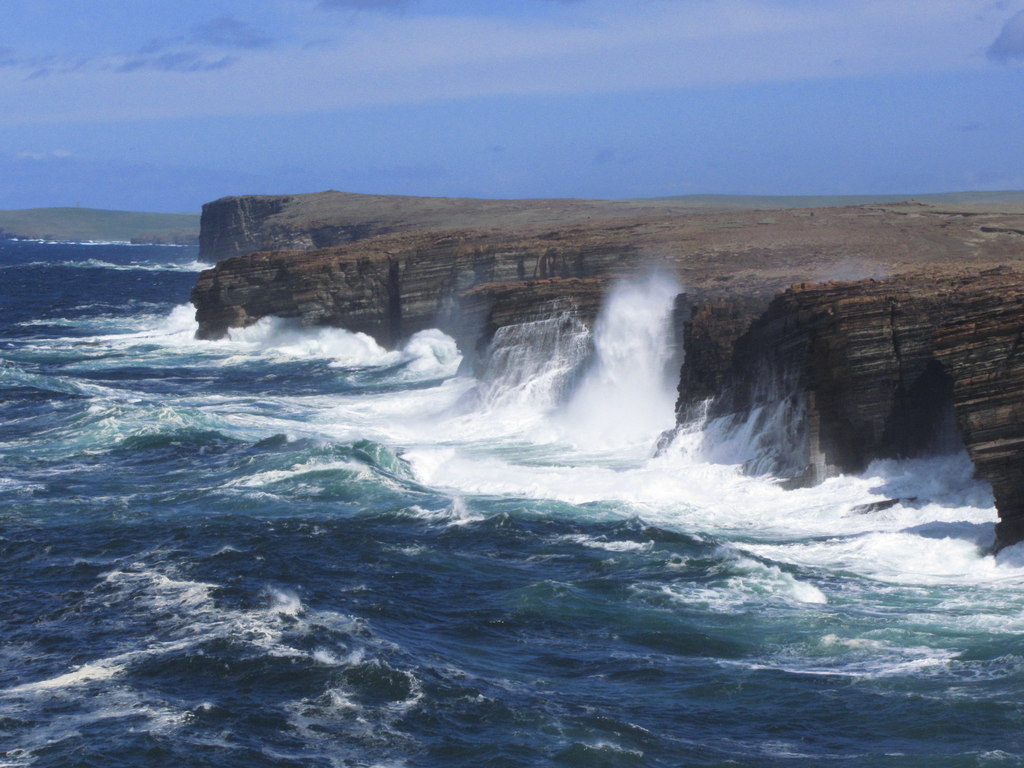
Best Hidden Gems in Orkney

Written by UK Hidden Gems Editorial
Updated 5 August 2026
The best hidden gems in Orkney are Knowe Of Yarso, St. Johns Head, The Whale Bone, Tomb of the Eagles, Hoxa Head, Noup Head Lighthouse, Yesnaby and Midhowe Tomb and Chambered Cairn.
Orkney is an archipelago where the past lies close to the surface, its low green islands scattered with Neolithic tombs, wartime relics and towering sea cliffs. Beyond the well-known monuments, quieter places wait for those willing to cross by ferry and walk out to find them.
On Rousay alone stand the chambered tombs of the Knowe of Yarso and the great Midhowe cairn, the largest and best preserved on the island. Hoy holds the sheer red wall of St John's Head, among the highest sea cliffs in Britain, while South Ronaldsay offers the Tomb of the Eagles and the wartime batteries of Hoxa Head.
On the Mainland the cliffs of Yesnaby run past stacks and blowholes, and at Birsay the story of the old Whale Bone lingers on the shore. Out on Westray, Noup Head Lighthouse stands above one of Orkney's largest seabird colonies.
Each asks a little effort to reach, and each repays it in full. Here are eight of the best hidden gems to seek out in Orkney.
Knowe Of Yarso
Photo: Gordon Hatton via Geograph.org.uk
Knowe Of Yarso is a Neolithic chambered tomb on a hillside above the coast on the island of Rousay in Orkney. A long, low mound covers a stone chamber divided by upright slabs into compartments, entered by a passage from one side.
When it was dug in the 1930s, the bones of some thirty people were found inside, along with those of dozens of red deer. Historic Environment Scotland keeps it, reached by a steep walk up from the road.
It rewards those who make the climb to seek it out.
St. Johns Head
Photo: Anne Burgess via Geograph.org.uk
St. Johns Head is a sheer wall of red sandstone cliff on the north-west coast of the island of Hoy in Orkney, among the highest vertical sea cliffs in Britain at around three hundred and fifty metres.
The horizontally bedded rock rises straight from the sea in bands of red and yellow, close to the celebrated sea stack of the Old Man of Hoy. Most people see it from the deck of the Scrabster to Stromness ferry as it passes, or on a long, boggy and pathless hillwalk over the Hoy hills.
The cliff edges are unguarded and demanding to reach on foot, so approach with great care.
The Whale Bone
Photo: N Chadwick via Geograph.org.uk
The Whale Bone was a landmark on the shore at Birsay, on the north-western tip of the Orkney Mainland, near the Brough of Birsay, a great jawbone of a whale set upright on the coast. It was raised around 1880, from a whale that had washed ashore some years before, and stood for well over a century as a well-known marker on the coastal walk, weathering and breaking over time.
It has since been taken down after storm damage, and a local trust has been raising funds for a bronze replica. The spot, with its nousts and old fishermen's hut nearby, remains a stop on the Birsay walk.
Tomb of the Eagles
Photo: Andrew Riley via Geograph.org.uk
Tomb of the Eagles is a Neolithic chambered cairn on a cliff edge at Isbister, on the island of South Ronaldsay in Orkney, built around five thousand years ago. It takes its name from the many talons and bones of sea eagles found inside, laid among the remains of hundreds of people over the centuries it was in use.
Visitors enter the low stone chamber, and a small centre displays finds from the tomb. Long run by the family who found it, it closed for a time and reopened in 2025 after a local community trust bought it, so it is worth checking opening arrangements before a visit.
Hoxa Head
Photo: J M Briscoe via Geograph.org.uk
Hoxa Head is a clifftop headland on South Ronaldsay in Orkney, guarding the southern way into the great naval anchorage of Scapa Flow. A waymarked coastal walk leads out to well-preserved coastal gun batteries, mostly from the Second World War, with concrete emplacements, magazines, searchlight positions and the shells of barracks.
The buildings stand weathered and roofless above the cliffs, with warnings not to enter. From the head the view runs out over the sound and the Flow.
It is a bracing place to seek out for a taste of wartime Orkney.
Noup Head Lighthouse
Photo: Des Colhoun via Geograph.org.uk
Noup Head Lighthouse is a white tower on the exposed north-west tip of the island of Westray in Orkney, standing above sheer Atlantic cliffs. It was built in 1898 by David Alan Stevenson and automated in 1964, its light carrying about twenty-two miles out to sea.
The cliffs around it hold one of the largest seabird colonies in Orkney, an RSPB reserve loud with guillemots, kittiwakes, razorbills and fulmars, with puffins in summer and a gannet colony on the lower ledges. A rough track leads to a small car park, and a clifftop walk takes in stacks, arches and inlets to seek out.
Yesnaby
Photo: N Chadwick via Geograph.org.uk
Yesnaby is a stretch of sea cliffs on the west coast of Mainland Orkney, in Sandwick about ten miles north of Stromness, reached by a minor road ending at a small clifftop car park. A clifftop path runs past inlets, blowholes and sea stacks, the best-known being the slender Yesnaby Castle stack with a natural arch at its base.
Brick buildings and a lookout hut survive from a wartime coastal battery that formed part of the Scapa Flow defences. The cliffs are known for the rare Scottish primrose and for fossils in the old red sandstone.
It is a dramatic place to seek out.
Midhowe Tomb and Chambered Cairn
Photo: Sandy Gerrard via Geograph.org.uk
Midhowe Tomb and Chambered Cairn is a huge Neolithic tomb on the west shore of Rousay in Orkney, the largest and best-preserved of the island's many cairns, nicknamed the Great Ship of Death for its long, narrow shape. The stalled chamber, over twenty metres long, is divided into a dozen compartments by upright slabs, and the remains of at least twenty-five people were found in it.
The whole tomb is now enclosed in a modern stone-and-glass building with raised walkways, so visitors look down into the chamber from above. It stands close to Midhowe Broch, reached on the same walk down to the shore.
FAQs
How do you reach Orkney's hidden gems?
Many sit on the smaller islands such as Rousay, Hoy, Westray and South Ronaldsay, reached by ferry and then a walk over open ground. Some, like the Knowe of Yarso, involve a steep climb from the road, so allow time and wear sturdy footwear.
Is the Tomb of the Eagles open to visitors?
The Tomb of the Eagles closed for a time and reopened in 2025 after a local community trust bought it. Because arrangements have changed, it is worth checking opening details before you plan a visit.
Which Orkney hidden gems are best for wildlife?
Noup Head Lighthouse on Westray stands above one of Orkney's largest seabird colonies, loud with guillemots, kittiwakes and razorbills, with puffins in summer. The cliffs at Yesnaby are known for the rare Scottish primrose, so both reward nature lovers.
Conclusion
From Neolithic tombs on the shores of Rousay to lighthouse cliffs alive with seabirds on Westray, Orkney rewards the traveller who ventures beyond its best-known sites. These islands hold ancient cairns, towering sea cliffs, wartime batteries and windswept headlands, each carrying its own long history.
Many lie on the smaller islands, reached by ferry and then a walk over open ground, and some, like the Tomb of the Eagles, are worth checking on before you set out. The cliff edges are often unguarded, so care is always wise.
Yet the effort brings a real sense of standing where few others do. Whether you come for archaeology, wildlife or wild coastal scenery, these are the best hidden gems to seek out in Orkney.