Top Hidden Gems Day Trips from St Albans

Written by UK Hidden Gems Editorial
Updated 5 August 2026
The top Hidden Gems Day Trips from St Albans include Roman Wall of St Albans, London Gate, Roman Theatre of Verulamium, Hypocaust & Roman Mosaic, Welwyn Roman Baths, Bushey Rose Garden, Scott's Grotto and Hampstead Bathing Pond.
St Albans wears its Roman past lightly, and some of its best hidden gems are the quiet survivals of Verulamium, the city that stood here nearly two thousand years ago. Most cluster in Verulamium Park on the western edge of town, where you can walk up to a long stretch of Roman wall, trace the foundations of London Gate, wander the grassy banks of the Roman theatre and peer down at a preserved mosaic and its underfloor heating.
Push a little further out and the day-trip options widen. To the northeast, near Welwyn, a Roman bath house lies sealed beneath a motorway junction.
South at Bushey, an Edwardian rose garden waits in the middle of town. East towards Ware, an eighteenth-century grotto burrows into a chalk hillside, while south again, on the edge of north London, the Hampstead bathing ponds offer a cold-water swim among the trees.
Together they make an easy patchwork of history, gardens and wild water within a short hop of the city. Here are eight hidden gems for a day trip from St Albans.
Roman Wall of St Albans
Photo: Nigel Cox via Geograph.org.uk
Roman Wall of St Albans Tucked into Verulamium Park on the western edge of the city, this is a long surviving stretch of the wall that once ringed Roman Verulamium. Built of flint and tile in the AD 260s, it originally ran for around two miles and stood some five metres high; the surviving sections still rise to about four metres, with the footings of towers and a town gate alongside.
It sits within easy reach of the centre, close to the Roman museum, the lake and the theatre. Best of all, it is a free English Heritage site, open in the park for anyone to wander up to.
London Gate
Photo: Philip Halling via Geograph.org.uk
London Gate A short stroll further into Verulamium Park brings you to the excavated remains of Verulamium's main southeastern gateway. Low stone foundations trace the outline of the gate, which once stood on Watling Street, the Roman road running down to London that lent it its name.
Stretches of the city wall from around AD 270 survive close by, and the whole park is open and free to explore. While you are here, the lake, the covered Hypocaust mosaic and the Verulamium Museum are all within a few minutes' walk, making it easy to string several sites together.
Roman Theatre of Verulamium
Photo: PAUL FARMER via Geograph.org.uk
Roman Theatre of Verulamium Also on the city's western edge, this is one of very few genuine theatres known from Roman Britain. Visitors wander among grassy banks and low foundation walls, with a single replica column marking where the stage once stood and the footings of a townhouse and shrine nearby.
It was built around AD 140 and later enlarged to seat several thousand, before falling out of use and ending its days as a rubbish tip. The site sits on the private Gorhambury estate and asks a small entry fee, but it remains open to visitors and well worth seeking out.
Hypocaust & Roman Mosaic
Photo: Nigel Cox via Geograph.org.uk
Hypocaust & Roman Mosaic Kept within a small glass-fronted building in Verulamium Park, this Roman mosaic floor and the heating system beneath it have been preserved exactly where they were dug up. Both come from a large town house of around AD 200, part of the Roman city that once stood here.
You can look down onto the patterned floor and the brick pillars that once supported it, with warm air having passed between them long ago. It costs nothing to enter and sits close to the Verulamium Museum, so it slots neatly into a wider wander around the park.
Welwyn Roman Baths
Photo: Mr Ignavy via Geograph.org.uk
Welwyn Roman Baths A short drive northeast towards Welwyn takes you to something genuinely unusual: the preserved bath house of a Roman villa, sealed inside a steel vault beneath junction 6 of the A1(M). A pedestrian tunnel leads down to the chamber, where you can make out the underfloor heating and the floors of the warm, hot and cold rooms, complete with the cold plunge bath.
The remains were uncovered in 1960 by a local archaeologist and saved when the motorway was driven over them. Welwyn Hatfield Museum Service now looks after the site, which makes a curious contrast of ancient and modern.
Bushey Rose Garden
Photo: Alex McGregor via Geograph.org.uk
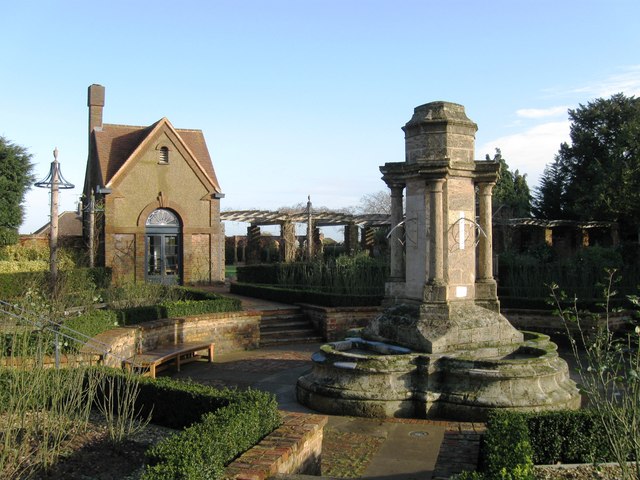
Bushey Rose Garden Head south to the town of Bushey for this small, restored formal garden, laid out with beds of roses around a carved stone fountain. It was designed in the early nineteen-hundreds by Thomas Mawson, a leading garden designer of the day, for the artist Hubert von Herkomer, who lived in the grand house next door and reputedly paid Mawson with a portrait rather than a fee.
The garden slipped into decline over the decades but was carefully restored and reopened around 2010, its terraces, paths and rose beds returned to their original design. On a summer's day the beds are full of colour and scent, and entry is free.
Scott's Grotto
Photo: Mike Quinn via Geograph.org.uk
Scott's Grotto Out towards Ware, a little over twenty kilometres east, lies this eighteenth-century grotto dug into a chalk hillside, often called the finest of its kind in England. Behind an unassuming entrance run underground passages and chambers lined with flints, shells, fossils and coloured glass.
It was created between 1764 and 1768 by the Quaker poet John Scott as a private retreat and a place to entertain guests, its six chambers reaching back into the hill, the deepest some way below the summit and lit by shafts to the surface. A local society cares for it and opens it on set days, so check ahead before visiting.
Hampstead Bathing Pond
Photo: Richard Rogerson via Geograph.org.uk
Hampstead Bathing Pond Roughly twenty-five kilometres south, on the edge of north London, the bathing ponds of Hampstead Heath offer natural freshwater swimming among trees and grassland. Three ponds are set aside for swimmers: the Men's Pond and the Ladies' Pond on the Highgate side, and a Mixed Pond nearer Hampstead, all staffed by lifeguards.
The Men's and Ladies' ponds stay open all year, drawing hardy cold-water swimmers even through winter, while the Mixed Pond opens only in the warmer months. The water is chilly and silty, alive with ducks and other wildlife, and the heath around makes a fine spot to dry off afterwards.
FAQs
How far are these hidden gems from St Albans?
Half of them sit within a couple of kilometres of the centre, in and around Verulamium Park. The rest range wider, from Welwyn and Bushey about twelve kilometres out to Ware, Hampstead and the edge of north London around twenty to twenty-five kilometres away, all comfortable for a single day.
Which of these are free to visit?
Several cost nothing. The Roman wall, London Gate and the Hypocaust mosaic in Verulamium Park are all free, as is Bushey Rose Garden. The Roman theatre asks a small fee, and Scott's Grotto near Ware opens on set days, so it is worth checking times before you set off from St Albans.
Can you swim near St Albans?
Yes. The Hampstead Heath bathing ponds, on the edge of north London and reachable within a day trip from St Albans, offer lifeguarded freshwater swimming. The Men's and Ladies' ponds open year-round for cold-water dips, while the Mixed Pond opens in the warmer months.
Conclusion
From the walls and mosaics of Verulamium to a grotto hidden in a chalk hillside, this corner of Hertfordshire packs a surprising amount into a short radius. You could spend a whole morning in Verulamium Park alone, then strike out to Welwyn's buried bath house, the roses at Bushey or the underground chambers at Ware, before cooling off in the Hampstead ponds as the day winds down.
Some sites are free and open at any hour, while others keep set opening days, so a little planning goes a long way. Whether you are drawn to Roman history, quiet gardens or wild water, there is plenty here to fill a day out.
Layered with history and easy to reach, these are the hidden gems for a day trip from St Albans.