Best Beaches in Cornwall

Written by UK Hidden Gems Editorial
Updated 5 August 2026
The best beaches in Cornwall are Basset’s Cove, Porth Joke, Prussia Cove, Kiberick Cove, Barn Pool Beach, St George’s Cove, Spit Beach Par and Porthmeor Cove.
Cornwall's long coastline is edged with beaches of every kind, from broad Atlantic surf strands to tiny rocky coves hidden at the foot of high cliffs. The best of them often take a little effort to reach, down steep paths from the clifftop or along a stretch of the South West Coast Path, and many have no facilities at all beyond the sand and the sea.
On the wild north coast lie Basset's Cove beneath the North Cliffs, the unspoilt sands of Porth Joke and the remote, boulder-strewn Porthmeor Cove out toward Zennor. Around the south and the Roseland you will find the smugglers' inlets of Prussia Cove, secluded Kiberick Cove below Nare Head, sheltered Barn Pool on Plymouth Sound, quiet St George's Cove on the Camel estuary and the tucked-away Spit Beach near Par.
Each has its own story, whether geology, history or simply an unspoilt feel, and each rewards the walk in. Here are eight of the best beaches to seek out in Cornwall.
Basset’s Cove
Photo: habiloid via Geograph.org.uk
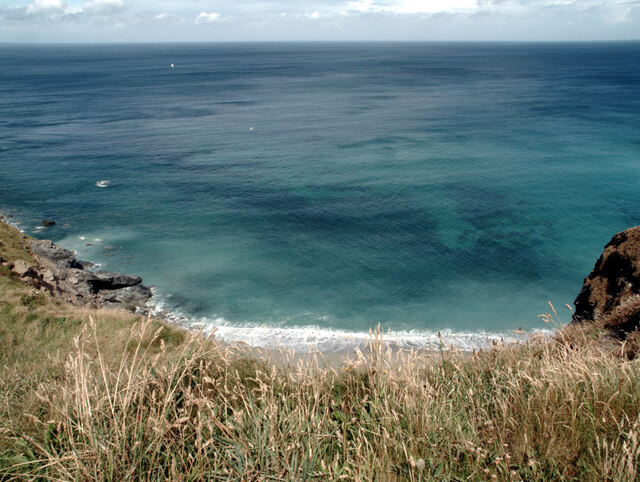
Basset’s Cove is a small cove at the foot of the high North Cliffs, on the Cornish coast between Portreath and Godrevy. A steep path drops from the cliff top to the shore, where fine soft sand lies at the base of the cliffs with rocks and pools at its edges.
High, dark cliffs rise on either side, and the South West Coast Path runs along the top with long views over the sea. It is a quiet, tucked-away beach, backed by open, grassy, windswept clifftop, and takes its name from the Basset family, the mine owners who once held this coast.
Follow the path down for the sand and the Atlantic beyond.
Porth Joke
Photo: Steve Daniels via Geograph.org.uk
Porth Joke, also called Polly Joke, is a small sandy cove on the north coast of Cornwall, tucked between the West Pentire headland and Crantock, west of Newquay. It is National Trust land and almost entirely undeveloped, backed by dunes, with the sand broadening as the tide falls and no buildings or facilities at the shore.
Access is on foot along the coast paths, about ten minutes from the nearest car parks. The headland above is known for its summer show of poppies and other arable wildflowers, and the cove is a favourite for its unspoilt feel.
Walk in from the car parks to enjoy it at its quietest.
Prussia Cove
Photo: Adrian Dust via Geograph.org.uk
Prussia Cove is not one cove but a small group of rocky inlets on the south-facing coast of Mount's Bay, near Cudden Point, once known as Porthleah. It is well-known as the haunt of the Carter family of smugglers in the eighteenth century, whose leader John Carter styled himself the King of Prussia, from which the place took its name.
Reached on foot along the coast path, it is a quiet, semi-private and undeveloped spot, where visitors see caves, old slipways and cart tracks cut into the rock and a row of former coastguard cottages above. The coves are Piskies Cove, Bessy's Cove and King's Cove.
Walk the path to explore all three.
Kiberick Cove
Photo: Derek Harper via Geograph.org.uk
Kiberick Cove is a small, remote cove on the Roseland coast of south Cornwall, below Nare Head near Veryan, on National Trust land. A long, steep path leads down to it from the fields above, with no parking at the cove and no facilities to speak of.
Sand shows at low tide below the cliffs, with rock pools and stony ground at the top of the beach. It is a quiet, out-of-the-way spot reached only on foot, and rewards anyone willing to make the walk down and back up.
Time your visit for low water to find the sand.
Barn Pool Beach
Photo: Philip Halling via Geograph.org.uk
Barn Pool Beach is a steep shingle beach on the Cornish side of Plymouth Sound, tucked below the woods and parkland of the Mount Edgcumbe estate. Pebbles bank the shore and drop quickly into deep, sheltered water, a quiet anchorage looking straight across the Sound to Drake's Island and the city beyond.
Behind rise the lawns, trees and old gardens of the country park, with picnic tables on the grass and paths leading off along the shore, while boats often lie at anchor in the pool offshore. It is a calm, green corner facing a busy waterway, reached on foot through the estate.
Walk down through the park to reach it.
St George’s Cove
Photo: Andy F via Geograph.org.uk
St George’s Cove is a sandy cove on the eastern shore of the Camel estuary, the first beach north of Padstow on the walk out toward Harbour Cove. It faces the estuary rather than the open sea, backed by low cliffs and dunes, a quieter, sheltered spot than the busy harbour town behind.
You reach it on foot along the South West Coast Path from Padstow, with more sand showing at lower tides, and there are no facilities on the cove itself, the shops and cafes being back in the town. Stroll out from Padstow to leave the crowds behind.
Spit Beach Par
Photo: mike hancock via Geograph.org.uk
Spit Beach Par is a small, quiet cove on St Austell Bay, on the western side of Par docks, tucked below the china-clay works and the edge of a golf course. A disused pipeline crosses the beach, with a patch of sand on one side and rock and pools on the other.
It is reached on a short walk from a small car park on Par Moor Road, under the railway line and down steps, with a scramble over rocks at the end. With no facilities, it makes a quieter alternative to the busier beaches nearby, and is a separate beach from the larger Par Sands along the coast.
Pick your way over the rocks to find it.
Porthmeor Cove
Photo: Tony Atkin via Geograph.org.uk
Porthmeor Cove is a small, remote cove of white sand, pebbles and large boulders on the wild coast between Zennor and Morvah in west Cornwall, not to be confused with the busy Porthmeor Beach at St Ives. It is one of the most important geological spots in Cornwall, where the granite of the West Penwith moors meets the darker rock around it, the join clear to see in the cliffs and boulders.
Reached only on foot down steep, narrow paths from the coast path, it forms a natural tidal pool best just after low water and covers over at high tide. There are no facilities.
Come just after low tide for the pool.
FAQs
Which Cornwall beaches are the most remote?
Kiberick Cove and Porthmeor Cove are among the most out-of-the-way, both reached only on foot down long, steep paths with no facilities. Basset's Cove and Porth Joke are quiet too, tucked below cliffs or dunes away from the road.
Do these beaches have facilities?
Most do not. Porth Joke, Kiberick Cove, St George's Cove, Spit Beach and Porthmeor Cove have nothing at the shore, so shops and cafes are back in the nearest town or village. Bring water, food and anything else you need.
How do you reach these coves?
Nearly all involve a walk. Several sit on the South West Coast Path, with steep paths dropping from the clifftop, and some, such as Spit Beach, add steps and a scramble over rocks at the end.
Conclusion
Cornwall's coves reward those willing to walk for them, trading car parks and cafes for solitude, geology and a real sense of the wild Atlantic. From Basset's Cove and Porthmeor Cove on the rugged north coast to the smugglers' inlets of Prussia Cove and the sheltered calm of Barn Pool on Plymouth Sound, the county's quieter shores each have their own draw.
Many have no facilities at all and are reached only on foot down steep paths, so check the tides, wear sturdy footwear and take what you need with you. Whether you are hunting rock pools, chasing surf, tracing history or simply looking for an unspoilt patch of sand, from wildflower-topped Porth Joke to remote Kiberick Cove, these are the best beaches to seek out in Cornwall.