Best Hidden Gems in Cornwall

Written by UK Hidden Gems Editorial
Updated 5 August 2026
The best hidden gems in Cornwall are Tremayne Quay, Cligga Head Wolframite Mine & Explosives Factory, King Arthur's Statue, Geevor Tin Mine, Old Serpentine Works, The Great Flat Lode, The Minack Theatre and Carn Euny Ancient Village.
Cornwall's coast and old mining country hide far more than its busy beaches. The eight places here run the length of the county, from the Helford River in the south to the cliffs of Tintagel in the north and the ancient stones of West Penwith near Land's End.
Mining runs through many of them: headlands stained red and orange by minerals, ruined engine houses across the hills, a whole heritage trail around an old tin lode, and a museum on a mine that worked until 1990. Others are quite different, a Cistercian quay built for a royal visit that never came, a hollow bronze figure of a king on a clifftop, an open-air theatre carved by hand into the rock, and an Iron Age village with an underground passage you can walk into.
Some need tickets or a long coast-path walk; others are free and open. Here are eight hidden gems to seek out across Cornwall.
Tremayne Quay
Photo: Dr Duncan Pepper via Geograph.org.uk
Tremayne Quay is a solid stone quay on a wooded, tidal reach of the Helford River, part of the Trelowarren estate. It was built in the 1840s for a visit by Queen Victoria that never happened, as she chose not to come up the river.
The quay is reached today on foot through National Trust woodland along the old carriage drive, and it is a quiet spot popular with walkers and with people arriving by kayak or small boat. Dry stone rubble makes up the walls, with dressed granite for the steps and copings.
The Trust has cared for the woods and quay since 1978.
Cligga Head Wolframite Mine & Explosives Factory
Photo: Anne Burgess via Geograph.org.uk
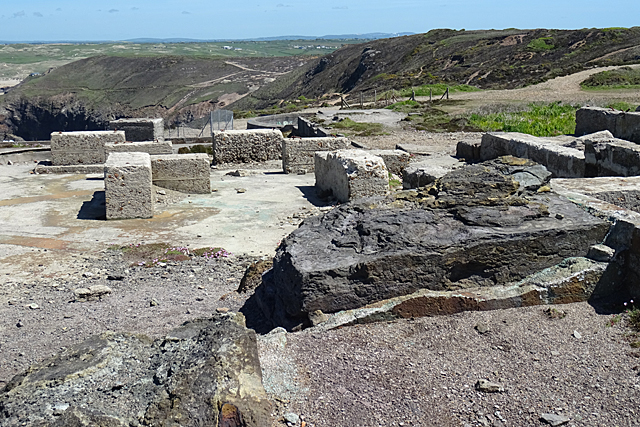
Cligga Head is a granite headland on the coast path between Perranporth and St Agnes, its cliffs stained deep red and orange by the minerals in the rock. The ground is broken by old tin and wolfram workings, with capped shafts, adits cut into the cliff and the foundations of machinery.
On the landward side stand the heavy blast walls and blocked tunnels of a former explosives works. Part of the headland was later taken into an airfield.
It is a raw, industrial-edged stretch of coast, best explored with care along the path.
King Arthur's Statue
Photo: Shaun Ferguson via Geograph.org.uk
On the cliffs of Tintagel stands a bronze figure called Gallos, often known as the King Arthur statue, an eight-foot form of a crowned man leaning on a sword. It is deliberately hollow, its body full of gaps so you can see the sea and sky through it, giving it a ghostly look on the headland.
It was set here in 2016 to mark the site's history as a stronghold of early Cornish kings, drawing on the Arthur legend rather than showing any one man. It stands out on the exposed clifftop above the ruins of Tintagel Castle.
Geevor Tin Mine
Photo: pam fray via Geograph.org.uk
Geevor is a former tin mine at Pendeen near St Just, now kept as a mining museum on a large site above the sea. The surface buildings survive, including the works where the ore was dressed, and guided tours lead underground into old workings by hand.
It is part of the Cornish mining landscape recognised as a World Heritage Site. The mine worked until 1990, and the museum tells the story of the men who worked it, one of the best places to grasp what hard-rock mining meant in Cornwall.
Old Serpentine Works
Photo: Colin Vosper via Geograph.org.uk
The Old Serpentine Works are the ruins of a Victorian stone factory at Carleon Cove, at the foot of the wooded Poltesco valley on the eastern side of the Lizard peninsula, cared for by the National Trust. Serpentine is a dark green and red veined rock found on the Lizard, and the works polished and shaped it into mantelpieces, fonts, columns and ornaments.
A tall capstan house overlooks the little shingle cove, with low factory walls and a fallen chimney nearby, and polished stone can still be seen reused in the stiles and on the beach. The works ran from the 1850s until 1893.
The Great Flat Lode
Photo: Tony Atkin via Geograph.org.uk
The Great Flat Lode is a circular heritage trail of about seven and a half miles running around the hill of Carn Brea, between Camborne and Redruth, at the heart of the old tin-mining country. It follows the line of an unusually flat, tin-rich vein of ore, and passes a great scatter of ruined engine houses, chimneys and mine buildings across farmland and moor, part of the Cornish mining World Heritage Site.
Along the way are the best-preserved of the old mines, including King Edward Mine, once a training mine and now a museum. It is open to walkers, cyclists and riders.
The Minack Theatre
Photo: Brian Smith via Geograph.org.uk
The Minack Theatre is an open-air theatre carved into a granite cliff above the sea at Porthcurno, near Land's End, with terraced stone seats stepping down toward a stage backed by the Atlantic. It was the work of Rowena Cade, who began building it by hand in her garden in the 1930s, staging her first play here in 1932, and kept adding to it for the rest of her life.
It is both a working theatre, with a summer season of plays, music and opera, and a place to visit by day, with an exhibition, cafe and cliff gardens. Tickets are needed for shows and for daytime visits.
Carn Euny Ancient Village
Photo: Chris Gunns via Geograph.org.uk
Carn Euny sits on farmland in West Penwith, a set of low granite wall-footings marking out where people once lived in round courtyard houses grouped around open yards. The pull of the place is the fogou, a curving drystone passage built into the ground that you can walk into, with a side opening into a round stone chamber.
Three of the courtyard houses still read clearly on the ground, their walls standing knee to waist high. People lived here across a long span from the Iron Age into Roman times, and entry is free.
FAQs
Which Cornwall gem is best for families?
Geevor Tin Mine at Pendeen is a strong family choice, with surface buildings and underground tours that bring hard-rock mining to life. Carn Euny's walk-in fogou passage and Iron Age house footings make an atmospheric, free stop near Land's End.
Do you need a ticket for the Minack Theatre in Cornwall?
Yes, tickets are needed for the Minack Theatre, both for shows in the summer season and for daytime visits. By day you can see the hand-carved cliff theatre, its exhibition, cafe and cliff gardens above the sea at Porthcurno.
What is the fogou at Carn Euny?
The fogou at Carn Euny is a curving drystone passage built into the ground that you can walk into, with a side opening leading to a round stone chamber. It sits among the footings of round courtyard houses lived in from the Iron Age into Roman times, and entry is free.
Why are the cliffs at Cligga Head so colourful?
The cliffs at Cligga Head are stained deep red and orange by the minerals in the rock. The headland is broken by old tin and wolfram workings, with capped shafts, adits cut into the cliff and the blast walls of a former explosives works nearby.
Conclusion
Cornwall's mining past runs right through this set, from the mineral-stained cliffs of Cligga Head and the underground tours at Geevor to the ruined engine houses of the Great Flat Lode and the serpentine works tucked in the Poltesco valley. Alongside them stand places of a wholly different character: the quay at Tremayne, built for a royal visit that never came, the hollow bronze king on the cliffs of Tintagel, the hand-carved cliff theatre at the Minack, and the Iron Age fogou you can walk into at Carn Euny.
Several are World Heritage mining sites; some are free and open, while the Minack and Geevor ask for tickets. Spread across the whole county, they reward a slow route from the Helford to Land's End.
These are the places to seek out across Cornwall.