Best Beaches Near Middlesbrough

Written by UK Hidden Gems Editorial
Updated 5 August 2026
The best beaches near Middlesbrough are North Gare Beach, Robin Hood's Bay Beach, Blackhall Rocks Beach, Blast Beach, Horden Beach, Shippersea Bay, Kettleness Beach and Seaton Sluice Beach.
Middlesbrough sits on the Tees, with the Durham Heritage Coast to the north and the North Yorkshire coast curving south, and a run of shores that have swung from heavy industry back to wildlife and quiet. Nearest the mouth of the Tees, North Gare spreads its dune-backed sand within the Teesmouth nature reserve, framed by the chimneys of the works.
North along the Durham coast lie the reborn beaches once black with coal spoil: Horden and Blast Beach at Dawdon, where the opening of Alien 3 was filmed, the caves and limestone of Blackhall Rocks, once a Get Carter location, and the remote raised-beach cove of Shippersea Bay. South down the North Yorkshire coast are the fossil scars of Robin Hood's Bay and the wild, alum-worked shore at Kettleness.
Further north still, the golden dune sands of Seaton Sluice sit by their strange rock-cut harbour. Some are quiet and industrial-storied, others fossil-rich or wide and golden.
Here are eight beaches to seek out near Middlesbrough.
North Gare Beach
Photo: Mick Garratt via Geograph.org.uk
North Gare Beach runs across sand at the northern mouth of the River Tees, near Seaton Carew on Teesside, forming part of the Teesmouth nature reserve with low dunes and a golf links behind it. Its landmark is the North Gare breakwater, an old training wall pushing out into the sea, reached on foot over the dunes.
The outlook here plays on contrasts, with wild coast and wildlife to the north and the chimneys and cranes of the Teesside works away to the south. Birdwatchers love it for the waders and migrants along the shore, and there is a car park close at hand.
Bring binoculars and settle in.
Robin Hood's Bay Beach
Photo: Anthony Foster via Geograph.org.uk
Robin Hood's Bay is an old fishing and smuggling village tumbling down a steep hillside to the sea on the North Yorkshire coast, a few miles south of Whitby. Cars are left at the top, and a steep, narrow main street winds down between the cottages to the slipway and the shore.
At low tide the beach opens out into broad rocky ledges, known as the scars, full of rock pools, and it is one of the best places on this coast to hunt for fossils, with ammonites and other remains weathering out of the shale. The tide comes right up to the sea wall.
Blackhall Rocks Beach
Photo: Kevin Waterhouse via Geograph.org.uk
Blackhall Rocks is a rugged beach on the Durham coast, between Hartlepool and Seaham, set beneath cliffs of pale magnesian limestone. It is a rocky, pebbly shore rather than a broad sweep of sand, with the cliffs pierced by some of the largest caves along this coast and worn into hollows and inlets by the sea.
Steep steps lead down from the cliff top, where a nature reserve of thin, lime-rich grassland grows rare wildflowers through early summer. For much of the twentieth century this coast was black with waste from the coal mines, and the ending of the film Get Carter was shot here before it was cleaned up and brought back to life around 2000.
Blast Beach
Photo: Andrew Curtis via Geograph.org.uk
Blast Beach is a stretch of the Durham coast at Dawdon, near Seaham, set beneath cliffs of pale magnesian limestone. For most of the twentieth century it was one of the most spoiled beaches in Britain, buried under black waste tipped straight over the cliffs from Dawdon Colliery, the sand stained dark and the pools coloured by iron.
Its otherworldly look was so striking that the opening scenes of Alien 3 were shot here in the early 1990s, while coal waste was still coming down the cliffs. A major clean-up around 2000 stripped away much of the spoil, and though rust-red staining still marks some rocks, the coast has recovered, with limestone stacks standing out on the sand.
Horden Beach
Photo: Carol Rose via Geograph.org.uk
Horden Beach Once ranked among the most polluted beaches in Europe, this long Durham Heritage Coast shore spent years buried under coal waste tipped from the pits above. A major clean-up around 2000 stripped the spoil away, and the sand has come back far faster than anyone predicted, though streaks of ochre and coal still mark it in places.
Low limestone cliffs rise behind, grassland along their tops, with the coast railway threading the clifftop above. Few facilities reach it, so it stays quiet and wide open.
Walk its length and you are reading, in the sand underfoot, one of the more striking comebacks on the English coast.
Shippersea Bay
Photo: Mat Fascione via Geograph.org.uk
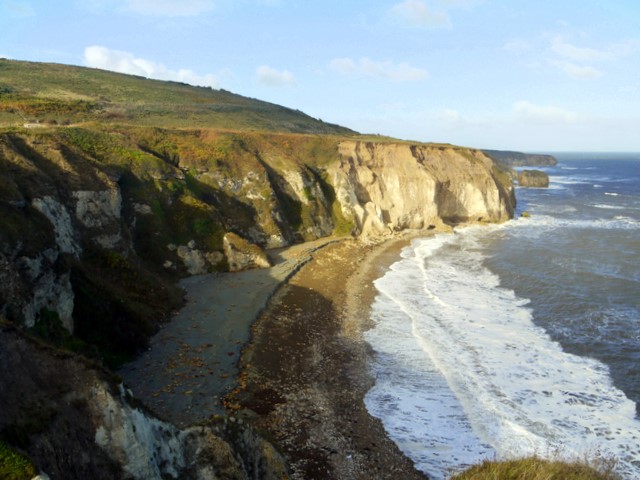
Shippersea Bay is a small, out-of-the-way cove tucked below yellow magnesian limestone cliffs on the Durham Heritage Coast, north of Easington. This coast was once blackened by coal spoil, but the shore has been cleaned up over recent decades, and the clifftops above, in the care of the National Trust, now carry rare limestone grassland and wildflowers.
The only way in is on foot along the clifftop coast path, which keeps the bay quiet and undisturbed. Geologists prize it for an ancient raised beach held in the cliff, laid down when the sea once stood higher than it does now.
A peaceful spot to have to yourself.
Kettleness Beach
Photo: Helen Wilkinson via Geograph.org.uk
Kettleness is a remote rocky and sandy shore beneath high cliffs on the North Yorkshire coast, just east of Runswick Bay. The Lower Jurassic shale cliffs here were heavily worked for alum in the past, reshaping the headland, and the foreshore is a well-known place for finding fossils such as ammonites and the bones of marine reptiles.
Access is either down a very steep clifftop path or around from Runswick Bay, and the sand lies at the foot of the cliffs. It is a wild, little-visited spot for fossil-hunters and walkers who do not mind the climb.
Seaton Sluice Beach
Photo: David Dixon via Geograph.org.uk
Seaton Sluice Beach is a stretch of golden sand backed by a large dune system on the Northumberland coast, between Blyth and Whitley Bay, at the old harbour village of Seaton Sluice. The dunes behind, kept as a nature reserve, are rich in wildflowers and wildlife, and the sand runs for miles north toward Blyth.
The village harbour has an unusual history: in the eighteenth century the Delaval family cut a deep channel straight through the rock, known as the Cut, to make a tide-free entrance, and ran a great bottleworks here. There are car parks and toilets along the front.
FAQs
What can you see at Blast Beach near Middlesbrough?
Blast Beach at Dawdon near Middlesbrough was where the opening of Alien 3 was filmed while coal waste still fell down the cliffs, and Blackhall Rocks, a Get Carter location, was black with colliery spoil for a century before a clean-up around 2000. Horden and Shippersea Bay on the Durham coast tell the same story of recovery.
Which beaches near Middlesbrough are best for fossil-hunting?
Robin Hood's Bay opens broad rocky scars full of ammonites and other fossils at low tide, and Kettleness, below alum-worked shale cliffs near Runswick Bay, is well known for ammonites and marine reptile bones. Both are on the North Yorkshire coast south of Middlesbrough.
Where can you go birdwatching or for a quiet walk near Middlesbrough?
North Gare at the mouth of the Tees sits within the Teesmouth nature reserve, a favourite with birdwatchers for waders and migrants along the shore. Shippersea Bay is a remote coast-path cove below wildflower clifftops, and Seaton Sluice has golden sand backed by a dune nature reserve.
Conclusion
Middlesbrough sits on the Tees, with the Durham Heritage Coast to the north and the North Yorkshire coast curving south, on a run of shores reborn from heavy industry. Nearest the Tees mouth, North Gare spreads its dune sand within a nature reserve framed by the works.
North along the Durham coast lie the reborn beaches once black with coal spoil, Horden and Blast Beach at Dawdon, the caves of Blackhall Rocks and the remote Shippersea Bay. South down the North Yorkshire coast are the fossil scars of Robin Hood's Bay and the alum-worked shore at Kettleness, with the golden sands of Seaton Sluice by their rock-cut harbour beyond.
From a film-set industrial shore to a fossil scar, these are the beaches to seek out near Middlesbrough.