Underrated Hidden Gems in Cornwall

Written by UK Hidden Gems Editorial
Updated 5 August 2026
The underrated hidden gems in Cornwall are Cligga Head Wolframite Mine & Explosives Factory, St Michael's Mount, Gravel Hill Mine, Madron Well, Trebarwith Strand Cave, Trevone Round Hole, Devil’s Frying Pan and King Arthur’s Hall.
Cornwall's biggest names draw the crowds, but some of its best corners stay quietly overlooked. These are the places that reward a little effort, off the main trail and away from the busy car parks.
On the coast between Perranporth and St Agnes, the red-stained cliffs of Cligga Head hide old mine workings and the blast walls of a former explosives works. Near Penzance, Madron Well sits in boggy ground beside a roofless medieval chapel hung with strips of cloth.
There is the tidal island of St Michael's Mount rising from its bay, the sea caves of Trebarwith Strand, the deep clifftop shaft of the Trevone Round Hole, and the churning bowl of the Devil's Frying Pan near Cadgwith. Add the disused Gravel Hill Mine behind a great beach and the ancient stone enclosure of King Arthur's Hall on Bodmin Moor, and you have a county well worth exploring slowly.
Each rewards the visitor who goes looking. Here are eight underrated hidden gems to seek out in Cornwall.
Cligga Head Wolframite Mine & Explosives Factory
Photo: Anne Burgess via Geograph.org.uk
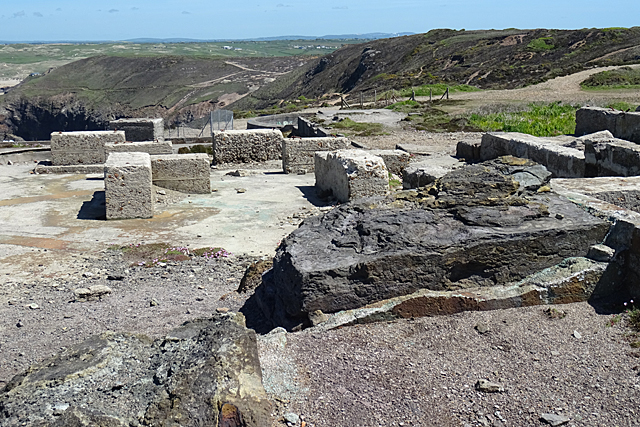
Cligga Head Wolframite Mine & Explosives Factory is a granite headland on the coast path between Perranporth and St Agnes, its cliffs stained deep red and orange by the minerals in the rock. It is easy to walk straight past, yet the ground here is full of history.
It is broken by old tin and wolfram workings, with capped shafts, adits cut into the cliff and the foundations of machinery. On the landward side stand the heavy blast walls and blocked tunnels of a former explosives works, and part of the headland was later taken into an airfield.
Take your time along this stretch and read the industry in the rock.
St Michael's Mount
Photo: Colin Manton via Geograph.org.uk
St Michael's Mount is a tidal island crowned by a medieval castle and church, rising from Mount's Bay off the town of Marazion. It draws visitors, yet it still rewards a proper look.
At low tide a granite causeway lets people walk across to it, and at high tide small boats ferry visitors over. At the foot of the rock is a little harbour village, and terraced subtropical gardens cling to the steep sides below the castle, which is still lived in by the St Aubyn family and cared for by the National Trust.
The castle, church and gardens are open to visitors, with wide views back over the bay. Time your crossing with the tide.
Gravel Hill Mine
Photo: Philip Halling via Geograph.org.uk
Gravel Hill Mine is a disused iron mine at the northern end of Perran Sands, a few miles north of Perranporth. It worked a rich lode of iron ore that runs through the cliffs here, busiest in the 1870s and early 1880s, and is prized by mineral collectors for the rare minerals in the ground.
It is an easily missed spot at the back of a great beach, among dunes and low cliffs. Some of the old cliff workings survive, though they are now flooded and closed behind a locked gate.
Come for the quiet setting and the sense of an industry the sands have almost swallowed.
Madron Well
Photo: David Medcalf via Geograph.org.uk
Madron Well is an ancient holy well in boggy ground about a mile northwest of Madron village, near Penzance. Close by stand the roofless granite walls of a small medieval baptistry chapel, with a stone altar and a channel that once carried the well water to a trough inside.
Strips of cloth tied by visitors, a clootie tradition linked to hopes of healing, hang from the trees near the chapel, giving the place a quiet, atmospheric feel. A path leads from a small car park to the chapel, with the well itself further on over wet, unmarked ground.
Wear stout boots and let this overlooked spot reveal itself.
Trebarwith Strand Cave
Photo: Derek Harper via Geograph.org.uk
Trebarwith Strand Cave sits on a beach on the north Cornwall coast a couple of miles south of Tintagel, where a long stretch of sand is exposed at low tide below high cliffs and almost entirely covered at high water. Several sea caves are cut into the cliffs, mostly toward the village end, along with rock pools and the offshore Gull Rock.
A cafe, toilets and a car park serve the beach, which has a summer surf break and seasonal lifeguards. Because it is a tidal beach, the sand comes and goes with the tide, so time a visit for low water to explore the caves.
Trevone Round Hole
Photo: Rob Farrow via Geograph.org.uk
Trevone Round Hole is a large sinkhole in the clifftop grass on the headland at the eastern side of Trevone Bay, near Padstow. A sea cave collapsed here long ago, leaving a near-circular open shaft with a channel at the bottom that still connects to the sea, around 80 feet deep.
It is easy to overlook on the coast path, yet few features on this stretch are quite so striking. On calm days at high tide it is possible to paddle a kayak in through the sea channel.
Walkers reach it from the beach along the coast path and look down from the unfenced rim, so take real care at the edge.
Devil’s Frying Pan
Photo: Bill Boaden via Geograph.org.uk
Devil’s Frying Pan is a great rocky bowl near Cadgwith on the Lizard, formed where a sea cave collapsed and left a funnel of cliff open to the sky. A natural arch still links it to the sea, and in rough weather the water churns and boils in the pit below.
It is an easily missed spot just off the coast path, yet a memorable one. It is seen from the coast path a short way south of Cadgwith Cove, and the dark rock and swirling sea give it its name.
Come on a wild day to see the water at its most dramatic.
King Arthur’s Hall
Photo: Chris Andrews via Geograph.org.uk
King Arthur’s Hall is a rectangular prehistoric enclosure on the open moor near St Breward on Bodmin Moor, reached by footpaths across rough ground. A low earth bank rings an interior lined with more than fifty standing stones, roughly twenty metres by forty-seven, and the inside is often grassy and waterlogged.
Dating work published in 2024 pointed to a Neolithic origin some five thousand years ago, far older than once thought, though what it was built for is unknown. The Arthurian name is later folklore with no real link to the site.
Pull on your boots and walk out across the moor to find it.
FAQs
What makes these Cornwall spots underrated?
They are lesser-known places that sit away from the busy car parks, from old mine workings at Cligga Head and Gravel Hill Mine to the holy well at Madron. Each rewards a bit of effort to reach and deserves more attention than it gets.
Can you go inside the Trevone Round Hole?
On calm days at high tide it is possible to paddle a kayak in through the sea channel at the bottom. From land, walkers look down into the shaft from the unfenced rim, so take real care at the edge.
Do you need to plan around the tides?
Yes, for several of them. The sands at Trebarwith Strand come and go with the tide, and the causeway to St Michael's Mount is only walkable at low water, so it is worth checking tide times before you set out.
Conclusion
Cornwall rewards those who look beyond the obvious. From the red cliffs and blast walls of Cligga Head to the flooded workings of Gravel Hill Mine, its industrial past lingers in quiet corners.
Madron Well sits atmospheric in its boggy ground, the sea caves of Trebarwith Strand appear only at low tide, and the deep shaft of the Trevone Round Hole and the churning Devil's Frying Pan show the power of the sea on this coast. Even a well-visited spot like St Michael's Mount still repays a slower look, and King Arthur's Hall waits out on Bodmin Moor.
Some need the tide, a locked gate or stout boots, so plan around each place. Overlooked but well worth the effort, these are the underrated hidden gems to seek out in Cornwall.